845, Ground Floor, Udyog Vihar Phase V, Sector 19, Gurugram, Haryana 122016
GET DIRECTION
Freshwater vs Cultured Pearl Stone: What's the Difference?

Pearls have long been admired for their timeless elegance, natural beauty, and symbolic association with purity and wisdom. When shopping for pearl jewelry or astrological gemstones, buyers often encounter terms like Freshwater Pearls and Cultured Pearls. While these terms are sometimes used interchangeably, they actually refer to different aspects of pearl formation.
Understanding the difference between freshwater and cultured pearls can help you make a more informed purchase and choose the pearl that best suits your style, budget, and needs.
What Is a Pearl?
A pearl is an organic gemstone formed inside a mollusk when an irritant enters its shell. To protect itself, the mollusk secretes layers of nacre around the irritant, gradually forming a pearl.
Pearls can develop naturally in the wild or be cultivated with human assistance. Today, the vast majority of pearls available in the market are cultured pearls.
What Are Freshwater Pearls?
Freshwater pearls are pearls grown in freshwater bodies such as:
- Rivers
- Lakes
- Ponds
- Reservoirs
They are primarily cultivated in freshwater mussels rather than saltwater oysters.
Characteristics of Freshwater Pearls
- Available in various shapes
- Wide range of natural colors
- Generally more affordable
- Excellent durability
- Produced in large quantities
China is currently the world's leading producer of freshwater pearls.
What Are Cultured Pearls?
A cultured pearl is a pearl created with human intervention. Pearl farmers carefully introduce an irritant or nucleus into a mollusk, encouraging the pearl formation process.
Cultured pearls can be grown in either:
- Freshwater environments
- Saltwater environments
This means that freshwater pearls are often cultured pearls, but not all cultured pearls are freshwater pearls.
Understanding the Key Difference
One of the most common misconceptions is that freshwater pearls and cultured pearls are opposites.
In reality:
| Freshwater Pearls | Cultured Pearls |
|---|---|
| Refers to where the pearl is grown | Refers to how the pearl is formed |
| Grown in lakes, rivers, and ponds | Created with human assistance |
| Usually grown in freshwater mussels | Can be freshwater or saltwater |
| Often more affordable | Available across various price ranges |
Therefore, a pearl can be both freshwater and cultured at the same time.
How Freshwater Pearls Are Cultured
Modern freshwater pearls are typically cultivated by inserting small pieces of mantle tissue into freshwater mussels.
Over time:
- The mussel coats the tissue with nacre.
- Layers continue building.
- A pearl gradually forms.
This process may take several years depending on the desired quality and size.
Appearance Differences
Freshwater Pearls
Freshwater pearls often feature:
- Round shapes
- Oval shapes
- Button shapes
- Baroque (irregular) shapes
Modern cultivation techniques have significantly improved their roundness and overall quality.
Saltwater Cultured Pearls
Saltwater cultured pearls are often known for:
- Higher luster
- More uniform shape
- Premium appearance
Examples include:
- Akoya Pearls
- South Sea Pearls
- Tahitian Pearls
Color Variations
Freshwater Pearls
Naturally available in:
- White
- Cream
- Pink
- Peach
- Lavender
These natural colors make freshwater pearls highly versatile.
Cultured Saltwater Pearls
May appear in:
- White
- Silver
- Golden
- Black
- Greenish-black
Color depends on the oyster species and growing environment.
Price Comparison
Freshwater Pearls
Typically:
✔ More affordable
✔ Widely available
✔ Excellent value for money
They are ideal for first-time pearl buyers and everyday jewelry.
Saltwater Cultured Pearls
Generally:
✔ More expensive
✔ Higher luster
✔ Greater rarity
Premium varieties such as South Sea and Tahitian pearls can command very high prices.
Luster and Shine
Luster refers to the way light reflects from a pearl's surface.
Freshwater Pearls
Modern freshwater pearls often display excellent luster, though it may vary by quality.
Saltwater Cultured Pearls
Premium saltwater pearls are frequently prized for their exceptionally sharp and mirror-like luster.
Durability and Wearability
Both freshwater and cultured pearls require proper care.
Pearls should be protected from:
- Perfumes
- Hairsprays
- Harsh chemicals
- Extreme heat
With appropriate maintenance, pearls can remain beautiful for generations.
Pearls in Vedic Astrology
In Vedic astrology, Pearl (Moti) is associated with the Moon and is traditionally worn to promote emotional balance, calmness, and mental peace.
For astrological purposes, astrologers often recommend:
- Natural pearls
- High-quality cultured pearls with thick nacre
- Certified gemstones from reputable sources
Always consult an experienced astrologer before purchasing a pearl for astrological use.
How to Identify Quality Pearls
When buying pearls, consider the following factors:
Surface Quality
Look for:
- Minimal blemishes
- Smooth surface
- Natural appearance
Luster
Higher luster generally indicates better quality.
Shape
Round pearls are often the most valuable, though unique baroque shapes are increasingly popular.
Size
Larger pearls are typically more valuable when quality remains consistent.
Certification
Certification helps verify authenticity and quality.
Which Pearl Should You Choose?
Choose Freshwater Pearls If:
- You want affordability.
- You prefer a wide variety of shapes and colors.
- You're purchasing everyday jewelry.
- You're a first-time pearl buyer.
Choose Premium Cultured Saltwater Pearls If:
- You want exceptional luster.
- You prefer luxury jewelry.
- You seek highly uniform pearls.
- You are investing in premium pearl pieces.
Frequently Asked Questions (FAQs)
Are freshwater pearls real pearls?
Yes. Freshwater pearls are genuine pearls produced by freshwater mussels.
Are all freshwater pearls cultured?
Most freshwater pearls available today are cultured rather than naturally occurring.
Which is more expensive: freshwater or cultured pearls?
Since freshwater pearls are usually cultured, the comparison is not direct. However, premium saltwater cultured pearls are generally more expensive than freshwater pearls.
Can freshwater pearls be used for astrology?
Many astrologers recommend certified, high-quality pearls, though preferences may vary depending on individual astrological guidance.
Which pearl has better luster?
Premium saltwater cultured pearls often exhibit stronger luster, but high-quality freshwater pearls can also be exceptionally beautiful.
Conclusion
Understanding the difference between freshwater and cultured pearls begins with recognizing that they describe different characteristics. Freshwater refers to the environment in which the pearl grows, while cultured refers to the method used to produce it.
Most freshwater pearls on the market today are cultured, offering beautiful colors, durability, and affordability. Meanwhile, premium saltwater cultured pearls are known for their exceptional luster and luxury appeal.
Whether you're purchasing pearls for jewelry, gifting, or astrological purposes, understanding these differences will help you choose a pearl that matches your preferences, budget, and expectations.
Share this post:

You Might Also Be Interested In
Discover more insightful articles related to this topic to deepen your gemstone knowledge.
17 August
Natural vs Lab-Grown Diamonds: Which Is Better?
Diamonds have long been associated with beauty, luxury, commitment, and timeless elegance. However, modern diamond...
7 July
Red Coral Pendant: Benefits and Best Ways to Wear It
A Red Coral Pendant, also known as a Moonga Pendant, is a beautiful piece of...
5 August
How to Identify a Genuine Emerald Gemstone
Emerald is one of the world's most treasured gemstones, admired for its rich green color,...
12 May
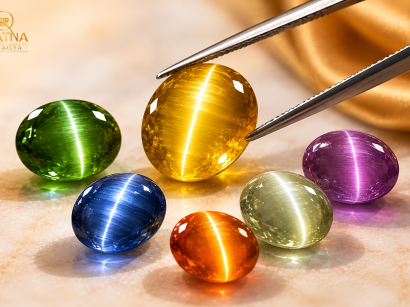
CAT'S EYE GEMSTONE AND ITS TYPES
The cat's eye gemstone is a beautiful gemstone. Apart from its unique look, which is...
22 April
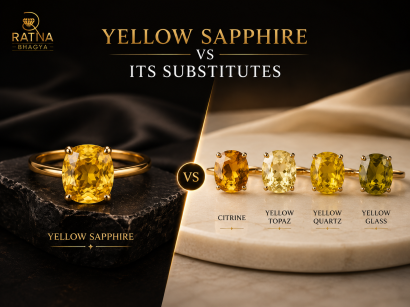
Difference Between Yellow Sapphire And Its Substitutes
There are gemstones that are extremely similar in colour, yet their characteristics are vastly different....
16 May
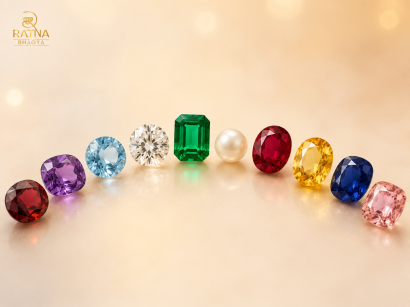
Anniversary Stones (Year-wise) & Their Significance
Married couples have been celebrating their anniversary, since the Middle Ages. To celebrate the occasion,...