845, Ground Floor, Udyog Vihar Phase V, Sector 19, Gurugram, Haryana 122016
GET DIRECTION
How Gemstones Are Formed: A Journey Beneath the Earth

Gemstones have fascinated humanity for thousands of years with their dazzling colors, exceptional durability, and remarkable rarity. Whether it's the deep blue of a sapphire, the vibrant green of an emerald, or the fiery brilliance of a ruby, every gemstone tells a story that began millions—sometimes even billions—of years beneath the Earth's surface.
But have you ever wondered how gemstones are formed? The answer lies in a fascinating combination of geology, heat, pressure, and time. In this guide, we'll take a journey beneath the Earth to explore the natural processes that create these extraordinary treasures.
What Is a Gemstone?
A gemstone is a naturally occurring mineral, rock, or organic material that is cut and polished for use in jewelry and decorative objects. To qualify as a gemstone, it generally possesses:
- Beauty
- Durability
- Rarity
Most gemstones are minerals formed deep within the Earth's crust or mantle, while others, such as Pearls, Red Coral, and Amber, are organic in origin.
The Basic Ingredients of Gemstone Formation
Every gemstone begins with a combination of natural elements and geological conditions. The formation process depends on several factors:
- Minerals and chemical elements
- High temperatures
- Intense pressure
- Water-rich fluids
- Geological activity
- Millions of years of natural transformation
Different combinations of these factors create different types of gemstones.
The Main Ways Gemstones Are Formed
1. Igneous Formation
Many gemstones form when molten rock (magma) cools and solidifies beneath or above the Earth's surface.
As magma cools slowly, minerals crystallize and grow into gemstone crystals.
Examples of Igneous Gemstones
- Diamond
- Zircon
- Topaz
- Peridot
How It Happens
- Magma rises beneath the Earth's surface.
- It cools gradually.
- Minerals crystallize over time.
- Large gemstone crystals develop under favorable conditions.
2. Metamorphic Formation
Some gemstones form when existing rocks are subjected to extreme heat and pressure deep underground.
These conditions alter the mineral composition without completely melting the rock.
Examples of Metamorphic Gemstones
- Ruby
- Sapphire
- Garnet
- Emerald
- Jade
How It Happens
- Rocks are buried deep within the Earth's crust.
- Temperature and pressure increase.
- Minerals reorganize into new crystal structures.
- Gem-quality crystals develop over millions of years.
3. Sedimentary Formation
Certain gemstones form through sedimentary processes involving water, mineral deposits, and biological activity.
Examples
- Opal
- Malachite
- Turquoise
Mineral-rich water slowly deposits material into cracks and cavities, eventually forming gemstones.
4. Hydrothermal Formation
Hydrothermal fluids are hot, mineral-rich solutions that move through cracks in rocks.
As these fluids cool, dissolved minerals crystallize and form gemstones.
Examples
- Emerald
- Quartz
- Topaz
- Aquamarine
This process often creates exceptionally clear and well-formed crystals.
How Diamonds Are Formed
Diamonds have one of the most remarkable origins of any gemstone.
They form:
- About 140–190 kilometers beneath the Earth's surface
- Under extremely high pressure
- At temperatures exceeding 1,000°C
Carbon atoms bond together in a unique crystal structure, creating the hardest natural material on Earth.
Volcanic eruptions later transport diamonds closer to the surface through special volcanic rocks known as kimberlite pipes.
How Colored Gemstones Get Their Color
Pure minerals are often colorless.
Tiny amounts of trace elements create the beautiful colors we admire.
Examples include:
| Gemstone | Trace Element | Typical Color |
|---|---|---|
| Ruby | Chromium | Red |
| Emerald | Chromium, Vanadium | Green |
| Sapphire | Iron, Titanium | Blue |
| Amethyst | Iron | Purple |
| Aquamarine | Iron | Blue |
Even very small amounts of these elements can dramatically change a gemstone's appearance.
Organic Gemstones: Formed by Living Organisms
Not all gemstones form underground.
Some originate from living organisms.
Pearl
Pearls form inside oysters and mussels when layers of nacre build around a tiny irritant.
Red Coral
Red Coral develops from the skeletons of marine coral polyps over many years.
Amber
Amber is fossilized tree resin that hardened over millions of years.
These gemstones are considered organic because they originate from biological sources.
The Role of Time
One of the most fascinating aspects of gemstone formation is the immense timescale involved.
Many gemstones require:
- Millions of years
- Tens of millions of years
- Hundreds of millions of years
- Sometimes billions of years
Natural geological processes work incredibly slowly, making high-quality gemstones both rare and valuable.
How Gemstones Reach the Surface
Although gemstones form deep underground, geological activity gradually brings them closer to the Earth's surface.
Processes include:
- Volcanic eruptions
- Mountain formation
- Earthquakes
- Weathering
- River erosion
Over time, gemstones become accessible for mining.
Gemstone Mining
After geological processes expose gemstone deposits, miners extract them using various methods.
Open-Pit Mining
Used when gemstone deposits are close to the surface.
Underground Mining
Suitable for deeper deposits.
River Mining
Some gemstones are naturally carried into rivers, where they can be collected from alluvial deposits.
Modern mining practices increasingly emphasize environmental responsibility and worker safety.
Why Some Gemstones Are Rarer Than Others
Several factors contribute to a gemstone's rarity:
- Limited geological conditions
- Slow formation process
- Small crystal size
- Difficult mining conditions
- Limited global deposits
For example, diamonds require extremely specific conditions, while emeralds form only when rare geological events bring together the necessary minerals.
Fascinating Facts About Gemstone Formation
- Diamonds are among the oldest natural materials on Earth, with some estimated to be over 3 billion years old.
- Emeralds require a rare combination of beryllium and chromium or vanadium to form.
- Opals contain microscopic silica spheres that create their famous play-of-color.
- Some gemstones continue to form today through ongoing geological activity.
- No two natural gemstones are exactly alike.
Frequently Asked Questions (FAQs)
How long does it take for gemstones to form?
Most natural gemstones form over millions of years, while some, such as diamonds, may take billions of years.
Are all gemstones formed underground?
No. Most gemstones form beneath the Earth's surface, but organic gemstones like pearls, red coral, and amber originate from living organisms.
Why are gemstones different colors?
Trace elements such as chromium, iron, titanium, and vanadium give gemstones their distinctive colors.
Where are gemstones found?
Gemstones are found in many parts of the world, including Brazil, Sri Lanka, Myanmar, Colombia, Madagascar, Australia, and Africa.
Can gemstones be created in laboratories?
Yes. Scientists can produce laboratory-grown gemstones that have the same chemical composition and crystal structure as many natural gemstones. However, they differ in origin.
Conclusion
Every natural gemstone is the result of extraordinary geological processes that unfold over immense periods of time. From intense heat and pressure deep within the Earth to mineral-rich hydrothermal fluids and volcanic activity, nature carefully crafts these remarkable treasures through conditions that are difficult to replicate.
Understanding how gemstones are formed not only deepens our appreciation for their beauty but also highlights why they are so valuable and unique. Whether you're purchasing a diamond, sapphire, emerald, or opal, each gemstone represents millions of years of Earth's natural history—making it far more than just a piece of jewelry.
Share this post:
Relatest Post
You Might Also Be Interested In
Discover more insightful articles related to this topic to deepen your gemstone knowledge.

10 August
Red Coral Stone Ring Benefits: Who Should Wear It and Why?
Red Coral, popularly known as Moonga in India, is a distinctive organic gemstone admired for...
26 August
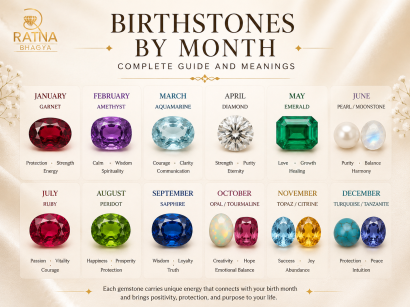
Birthstones by Month: Complete Guide and Meanings
Birthstones are gemstones traditionally associated with a particular month of the year. They have become...
12 August
Pearl Stone Meaning: Symbolism, Beauty, and Spiritual Significance
Pearls have captivated people for centuries with their soft luster, natural elegance, and timeless beauty....
22 April
Questions To Consider Before Buying Emerald Gemstone
Emerald Gemstones are precious green Beryl variant of a gemstone, also known as Panna in...

24 June
10 Famous Celebrities Wearing Ruby Gemstone and Their Success Stories
The Ruby gemstone (Manik) has long been associated with power, confidence, leadership, and success. In...

16 July
Ruby Gemstone Symbolism and Astrological Effects
Ruby, the ruler of all jewels, has gained its position due to its fiery red...