845, Ground Floor, Udyog Vihar Phase V, Sector 19, Gurugram, Haryana 122016
GET DIRECTION
How to Choose the Right Gemstone According to Astrology
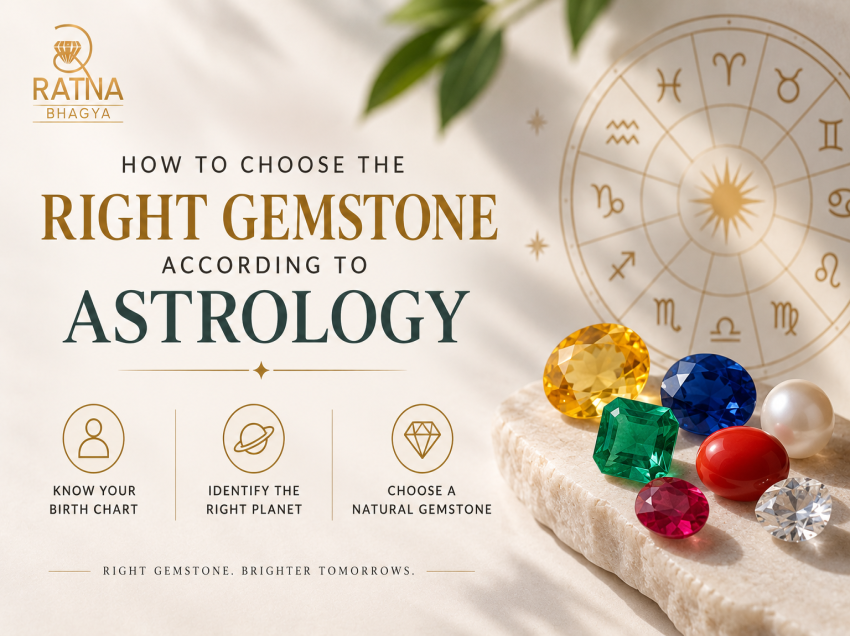
Choosing a gemstone according to astrology is not simply about picking a beautiful stone or wearing the gemstone associated with your zodiac sign. In Vedic astrology (Jyotish), gemstones are traditionally selected based on the individual's birth chart, planetary positions, ascendant, and the strength of different planets.
This is why the same gemstone may be considered suitable for one person but unsuitable for another.
Popular astrological gemstones such as Ruby, Pearl, Red Coral, Emerald, Yellow Sapphire, Diamond, Blue Sapphire, Hessonite, and Cat's Eye are traditionally associated with the nine planetary influences, or Navagraha.
If you're considering wearing a gemstone for astrological reasons, understanding the traditional selection process can help you make a more informed choice.
Disclaimer: Astrological gemstone recommendations are based on traditional Vedic astrology and cultural beliefs. There is no established scientific evidence that gemstones can strengthen planets, change destiny, or directly influence health, wealth, relationships, or other life events. Gemstones should not replace professional medical, financial, or other expert advice.
What Is an Astrological Gemstone?
An astrological gemstone is a gemstone traditionally associated with a particular planet in Vedic astrology.
According to Jyotish traditions, gemstones are believed to amplify the influence of their associated planets. Astrologers therefore traditionally recommend a stone after studying a person's birth chart.
The nine commonly recognized planetary gemstones are:
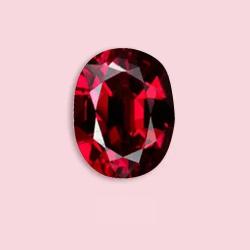
- Sun (Surya) — Ruby
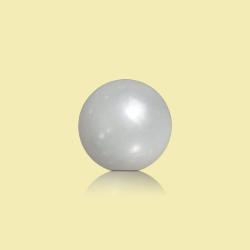
- Moon (Chandra) — Pearl
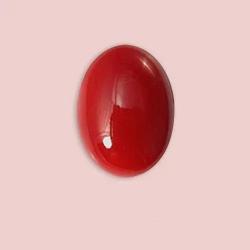
- Mars (Mangal) — Red Coral
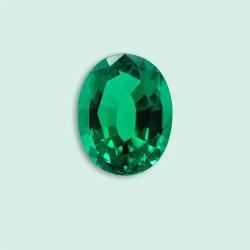
- Mercury (Budh) — Emerald
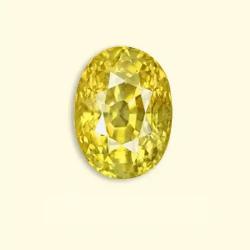
- Jupiter (Guru) — Yellow Sapphire
- Venus (Shukra) — Diamond
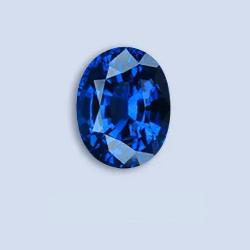
- Saturn (Shani) — Blue Sapphire
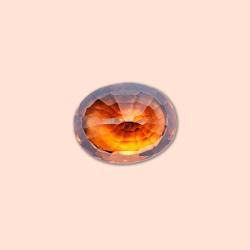
- Rahu — Hessonite Garnet
- Ketu — Cat's Eye
These associations form the foundation of traditional gemstone astrology.
Why Can't Everyone Wear the Same Gemstone?
One of the most important principles of traditional Vedic gemstone selection is individual suitability.
A gemstone is not traditionally considered beneficial simply because:
- It is your birthstone
- You like its color
- Your friend wears it
- Someone recommended it casually
- It is associated with your zodiac sign
Instead, astrologers traditionally examine the complete birth chart.
For example, two people born in the same month can have completely different ascendants and planetary placements. Consequently, the gemstone traditionally recommended for one person may differ from the other.
Step 1: Know Your Birth Details
The first step in choosing an astrological gemstone is obtaining accurate birth information.
Traditionally, an astrologer may require:
- Date of birth
- Exact time of birth
- Place of birth
These details are used to calculate the Janam Kundli, or birth chart.
Even a difference in birth time can sometimes change the ascendant or house placements, which may affect traditional gemstone recommendations.
Step 2: Determine Your Ascendant
The Ascendant (Lagna) is particularly important in Vedic astrology.
It represents the zodiac sign rising on the eastern horizon at the time of birth.
Traditional astrologers use the ascendant to determine:
- Planetary house ownership
- Benefic planets
- Challenging planets
- Planetary relationships
- Which planets may be strengthened
This is one reason simply choosing a gemstone based on your Sun sign is generally considered insufficient in traditional Jyotish.
Step 3: Analyze the Planet Associated With the Gemstone
Once a potential gemstone has been identified, traditional astrology examines the corresponding planet.
For example:
Ruby → Sun
Emerald → Mercury
Yellow Sapphire → Jupiter
Blue Sapphire → Saturn
The astrologer may assess:
- Planetary placement
- House position
- Strength
- Dignity
- Aspects
- Conjunctions
- Current planetary periods
The goal, within traditional astrology, is generally to strengthen a planet considered favorable or useful for the individual's chart.
Step 4: Understand Planetary House Ownership
This is an important part of gemstone selection.
A planet can rule different houses depending on the ascendant.
In traditional Jyotish, some houses are generally considered more favorable than others, while certain planetary combinations can change how a planet is interpreted.
Therefore, a gemstone recommendation should ideally consider the entire chart rather than one planetary placement.
Step 5: Consider the Planet's Strength
Astrologers may assess whether a planet is:
- Strong
- Weak
- Afflicted
- Benefic
- Malefic
- Favorably placed
- Unfavorably placed
Traditional gemstone practice generally emphasizes strengthening planets that are considered beneficial or supportive rather than simply strengthening every weak planet.
This distinction is important.
A weak planet is not automatically a planet that should be strengthened.
Step 6: Consider the Mahadasha and Antardasha
Vedic astrology uses planetary periods called Dasha.
The Mahadasha is a major planetary period, while an Antardasha is a sub-period.
Traditional astrologers may consider the current planetary period when deciding whether a gemstone is appropriate.
For example, if someone is going through a particular planetary period, an astrologer may evaluate whether strengthening that planet is traditionally recommended at that stage.
Step 7: Consider the Gemstone's Quality
Astrological suitability is only one part of the decision.
The gemstone itself should also be evaluated carefully.
Important factors include:
- Natural or synthetic origin
- Color
- Clarity
- Cut
- Carat weight
- Treatment
- Transparency
- Durability
- Certification
A gemstone can be traditionally recommended astrologically while still being a poor-quality purchase.
The Nine Main Astrological Gemstones
1. Ruby — Gemstone of the Sun
Planet: Sun (Surya)
Ruby is traditionally associated with:
- Confidence
- Leadership
- Authority
- Vitality
- Recognition
Ruby is the red variety of corundum and is one of the traditional gemstones of the Navagraha.
2. Pearl — Gemstone of the Moon
Planet: Moon (Chandra)
Pearl is traditionally associated with:
- Peace
- Emotional balance
- Intuition
- Calmness
- Sensitivity
Pearl is an organic gemstone and differs significantly from mineral gemstones such as Ruby and Sapphire.
3. Red Coral — Gemstone of Mars
Planet: Mars (Mangal)
Red Coral is traditionally associated with:
- Courage
- Energy
- Determination
- Confidence
- Action
It is an organic gem material formed by marine organisms.
4. Emerald — Gemstone of Mercury
Planet: Mercury (Budh)
Emerald is traditionally associated with:
- Communication
- Intelligence
- Learning
- Business
- Analytical thinking
Emerald is the green variety of beryl.
5. Yellow Sapphire — Gemstone of Jupiter
Planet: Jupiter (Guru)
Yellow Sapphire or Pukhraj is traditionally associated with:
- Wisdom
- Prosperity
- Knowledge
- Marriage
- Spiritual growth
- Good fortune
It is a yellow variety of corundum.
6. Diamond — Gemstone of Venus
Planet: Venus (Shukra)
Diamond is traditionally associated with:
- Love
- Beauty
- Luxury
- Creativity
- Relationships
Diamond is composed primarily of carbon and is the hardest naturally occurring mineral.
7. Blue Sapphire — Gemstone of Saturn
Planet: Saturn (Shani)
Blue Sapphire or Neelam is traditionally associated with:
- Discipline
- Patience
- Responsibility
- Perseverance
- Long-term progress
Because of its strong traditional reputation, astrologers often recommend examining the birth chart carefully before selecting Neelam.
8. Hessonite Garnet — Gemstone of Rahu
Planet: Rahu
Hessonite, commonly known as Gomed, is traditionally associated with:
- Ambition
- Transformation
- Focus
- Unconventional thinking
It is a variety of grossular garnet.
9. Cat's Eye — Gemstone of Ketu
Planet: Ketu
Cat's Eye, or Lehsunia, is traditionally associated with:
- Spiritual awareness
- Intuition
- Detachment
- Transformation
- Protection
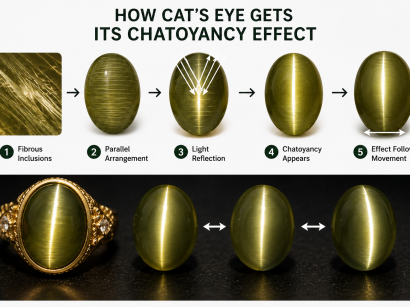
Chrysoberyl Cat's Eye is particularly valued for its distinctive chatoyancy.
Birthstone vs Astrological Gemstone
These two concepts are often confused.
Birthstone
A birthstone is traditionally associated with a person's birth month.
For example:
- January → Garnet
- February → Amethyst
- May → Emerald
- July → Ruby
- September → Sapphire
Astrological Gemstone
An astrological gemstone is traditionally selected based on a person's birth chart.
Therefore, your birthstone may not necessarily be your recommended astrological gemstone.
For example, someone may have Emerald as a birthstone association, but traditional Jyotish may recommend a different gemstone after analyzing their chart.
Should You Choose a Gemstone Based on Your Zodiac Sign?
Using zodiac signs as a starting point can be interesting, but it is not the same as a complete astrological analysis.
Online gemstone guides often say things such as:
- Aries → Red Coral
- Leo → Ruby
- Taurus → Diamond
- Sagittarius → Yellow Sapphire
However, traditional Vedic astrology generally considers more than just the Sun sign.
The Ascendant, Moon sign, planetary houses, planetary strength, and Dasha periods may all influence the recommendation.
Therefore, avoid treating generic zodiac-gemstone lists as personalized prescriptions.
How to Choose the Right Gemstone for Your Purpose
Different people approach gemstone astrology with different goals.
For Career and Professional Growth
Traditional astrology may examine planets associated with:
- Authority
- Communication
- Knowledge
- Discipline
- Professional responsibilities
Depending on the chart, gemstones such as Ruby, Emerald, Yellow Sapphire, or Blue Sapphire may be considered—but only after individual analysis.
For Marriage and Relationships
Traditional Jyotish may examine:
- Venus
- Jupiter
- Seventh house
- Relationship between relevant planets
- Current Dasha
Gemstones associated with Venus or Jupiter may sometimes be considered depending on the birth chart.
For Education and Knowledge
Mercury and Jupiter are traditionally associated with learning and wisdom.
Accordingly, Emerald and Yellow Sapphire may be considered in some charts.
For Confidence and Leadership
The Sun is traditionally associated with authority and confidence.
Therefore, Ruby may be considered when the Sun is favorable and strengthening it is traditionally appropriate.
Natural or Treated: Which Gemstone Should You Choose?
This is an important consideration when buying an astrological gemstone.
Natural Gemstone
Formed naturally through geological or biological processes.
Treated Gemstone
A natural gemstone that has undergone a process to improve its color, clarity, durability, or appearance.
Synthetic Gemstone
Created in a laboratory but may have essentially the same chemical and crystal structure as its natural counterpart.
Imitation
A different material made to resemble the gemstone.
If you're purchasing a gemstone for astrology, ask the seller specifically about all four possibilities.
Why Certification Is Important
A professional gemstone certificate can help establish:
- Gemstone identity
- Natural or synthetic origin
- Treatment status
- Weight
- Measurements
- Other identifying characteristics
This is especially important for expensive stones such as:
- Ruby
- Emerald
- Blue Sapphire
- Yellow Sapphire
- Diamond
A certificate cannot prove that a gemstone will produce an astrological result, but it can help verify what gemstone you are actually buying.
How Much Carat Weight Should You Wear?
Traditional astrology sometimes recommends a specific gemstone weight based on factors such as:
- Body weight
- Birth chart
- Planetary strength
- Astrological tradition
However, there is no scientifically validated formula that determines how many carats are required to create an astrological effect.
From a jewelry perspective, gemstone size should also take into account:
- Budget
- Ring design
- Durability
- Proportions
- Personal preference
Avoid purchasing an unnecessarily large gemstone simply because someone promises stronger results.
Which Metal Should You Use?
Traditional Vedic gemstone practices associate different gemstones with different metals.
Commonly used metals include:
- Gold
- Silver
- Platinum
- Copper
For example, traditional recommendations may associate:
- Ruby → Gold
- Pearl → Silver
- Red Coral → Gold or copper
- Emerald → Gold or silver
- Yellow Sapphire → Gold
- Blue Sapphire → Silver or white metals
These recommendations can vary between traditions and astrologers.
The metal should also be selected according to practical considerations such as durability, skin comfort, design, and budget.
When Should You Wear an Astrological Gemstone?
Traditional gemstone practices sometimes prescribe:
- A specific day
- A particular time
- A purification ritual
- A mantra
- A specific finger
- A specific metal
For example, traditional associations commonly include:
| Gemstone | Planet | Traditional Day | Commonly Recommended Finger |
|---|---|---|---|
| Ruby | Sun | Sunday | Ring finger |
| Pearl | Moon | Monday | Little finger |
| Red Coral | Mars | Tuesday | Ring finger |
| Emerald | Mercury | Wednesday | Little finger |
| Yellow Sapphire | Jupiter | Thursday | Index finger |
| Diamond | Venus | Friday | Ring finger |
| Blue Sapphire | Saturn | Saturday | Middle finger |
| Hessonite | Rahu | Saturday | Middle finger |
| Cat's Eye | Ketu | Tuesday/Thursday | Middle or ring finger depending on tradition |
These practices vary, so they should be treated as traditional guidelines rather than universal rules.
What Gemstones Should You Avoid Combining?
Traditional astrology sometimes considers certain planetary combinations incompatible or undesirable.
For example, some Jyotish traditions are cautious about wearing gemstones representing planets considered naturally hostile to one another.
This is one reason mix-and-match gemstone combinations found online should be approached carefully.
Do not assume that wearing more gemstones will automatically produce more benefits.
If you're wearing multiple stones for astrological purposes, have the combination evaluated as a complete set according to your birth chart.
How to Buy an Astrological Gemstone Safely
Before making a purchase, follow this checklist:
1. Get Your Birth Details Correct
Accurate birth information is traditionally important for chart calculation.
2. Consult a Qualified Astrologer
Ask for the reasoning behind the recommendation rather than simply accepting a gemstone name.
3. Verify the Gemstone
Confirm the exact gemstone species and variety.
4. Ask About Treatments
Find out whether the stone has been:
- Heated
- Filled
- Dyed
- Irradiated
- Otherwise enhanced
5. Request a Laboratory Report
Especially for expensive gemstones.
6. Compare Quality and Price
Don't choose a stone solely because a seller claims it is "powerful."
7. Ask About Return Policies
This is particularly important when purchasing online or spending a significant amount.
Common Mistakes When Choosing an Astrological Gemstone
Mistake 1: Choosing Only by Zodiac Sign
A Sun-sign-based recommendation may not reflect the complete birth chart.
Mistake 2: Assuming a Birthstone Is an Astrological Prescription
Birthstones and Jyotish gemstones are different concepts.
Mistake 3: Buying the Most Expensive Stone
Price does not determine astrological suitability.
Mistake 4: Ignoring Treatment
Treatment can significantly affect a gemstone's value and care requirements.
Mistake 5: Believing Guaranteed Results
Be cautious of claims such as:
- "100% guaranteed wealth"
- "Instant marriage"
- "Guaranteed job promotion"
- "Cures every disease"
- "Removes all negative energy"
No gemstone can scientifically guarantee these outcomes.
Science and Astrological Gemstones
From a scientific perspective, gemstones have measurable properties such as:
- Chemical composition
- Crystal structure
- Hardness
- Refractive index
- Specific gravity
- Optical behavior
- Color
These characteristics can be examined using gemological methods.
However, science has not established a mechanism by which wearing a gemstone strengthens a planet or changes a person's destiny.
This distinction is important when evaluating gemstone claims.
You can appreciate an astrological gemstone for its cultural, spiritual, symbolic, and aesthetic value without presenting traditional beliefs as scientific facts.
Frequently Asked Questions (FAQs)
How do I know which gemstone is right for me?
According to traditional Vedic astrology, the gemstone should ideally be selected after analyzing your birth chart, including the Ascendant, planetary positions, house ownership, planetary strength, and Dasha periods.
Can I choose a gemstone based on my zodiac sign?
You can use zodiac-based lists for general information, but they should not be treated as personalized Jyotish recommendations.
Is my birthstone the same as my astrological gemstone?
Not necessarily. A birthstone is associated with your birth month, while an astrological gemstone is traditionally selected according to your birth chart.
Which gemstone is considered the most powerful?
There is no scientifically established "most powerful" gemstone. In traditional astrology, the perceived importance of a gemstone depends on the planet it represents and the individual's birth chart.
Should I wear a natural gemstone for astrology?
Traditional gemstone practices generally place greater importance on natural gemstones. Regardless, buyers should verify the stone's identity and treatment status through reliable documentation.
Can I wear multiple astrological gemstones together?
Some traditional systems allow combinations, while others advise against certain planetary combinations. The compatibility should be evaluated according to the individual birth chart.
Does a bigger gemstone give stronger results?
There is no scientific evidence supporting this. Traditional recommendations for gemstone weight vary between astrologers and systems.
Can gemstones change my destiny?
This is a traditional astrological belief, not a scientifically established effect. Major life outcomes depend on numerous personal, social, economic, and environmental factors.
Conclusion
Choosing the right gemstone according to astrology involves much more than selecting a colorful stone from a zodiac chart. In traditional Vedic astrology, gemstone selection is a personalized process that considers the Ascendant, planetary positions, house ownership, planetary strength, aspects, and Dasha periods.
The nine principal planetary gemstones—Ruby, Pearl, Red Coral, Emerald, Yellow Sapphire, Diamond, Blue Sapphire, Hessonite, and Cat's Eye—each carry their own traditional planetary associations and symbolism.
If you decide to wear a gemstone for astrological reasons, take a balanced approach. Understand the traditional reasoning behind the recommendation, verify the gemstone's identity, natural or synthetic origin, treatment status, quality, and certification, and avoid sellers who promise guaranteed results.
Most importantly, remember that astrological suitability and gemstone quality are two separate considerations. A gemstone can have cultural or spiritual significance while also being evaluated objectively as a beautiful natural material.
Whether you wear a gemstone because of astrology, symbolism, or simply because you love its beauty, an informed choice will always be more valuable than a decision based on exaggerated promises.
Share this post:
You Might Also Be Interested In
Discover more insightful articles related to this topic to deepen your gemstone knowledge.
22 June
Is it necessary for a gemstone to touch the skin?
Gemstone have long been prized for their elegance and brilliance, as well as their medicinal...
18 August
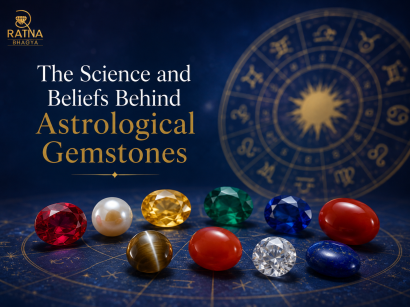
The Science and Beliefs Behind Astrological Gemstones
Astrological gemstones have fascinated people for centuries. From Ruby and Blue Sapphire to Yellow Sapphire,...
14 June
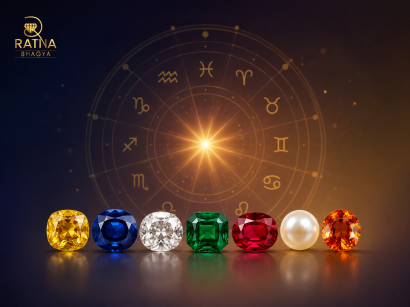
How Gemstones Affect Your Life and Kundli
Loads of people wear gemstones to bring fortune and prosperity into their lives, but now...
22 April
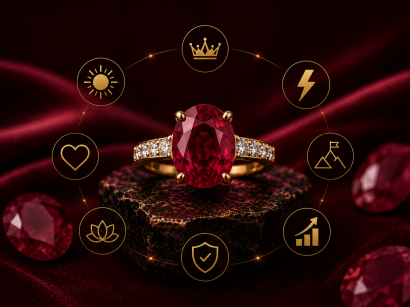
The Symbolism of Ruby Gemstone
There are various beneficial gemstones, yet none of them can be termed Supreme. Ruby has...
2 April
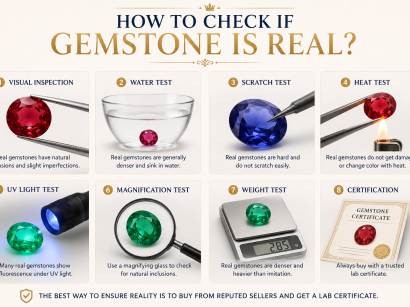
HOW TO CHECK IF GEMSTONE IS REAL?
Gemstones are expensive because they are uncommon, valuable, and attractive. They're worn as jewellery and...
19 June
How Cat's Eye Gets Its Unique Chatoyancy Effect
The Cat's Eye gemstone (Lehsunia) is one of the most fascinating gems in the world,...