845, Ground Floor, Udyog Vihar Phase V, Sector 19, Gurugram, Haryana 122016
GET DIRECTION
Yellow Sapphire Benefits: Why Pukhraj Is So Popular in Astrology
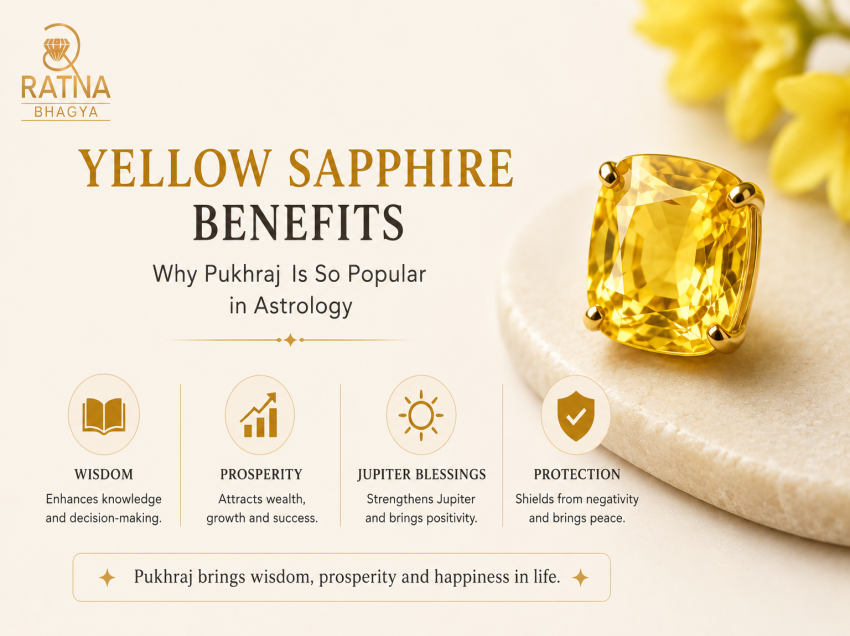
Yellow Sapphire, traditionally known as Pukhraj Stone, is one of the most respected gemstones in Vedic astrology. Its warm yellow color, natural beauty, rarity, and association with Jupiter (Guru) have made it a popular choice among people seeking an astrological gemstone.
For centuries, Yellow Sapphire has been associated with qualities such as wisdom, prosperity, knowledge, optimism, marriage, and spiritual growth. In traditional Jyotish, it is believed to strengthen the positive influence of Jupiter when the planet is considered favorable in a person's birth chart.
But why is Pukhraj so popular? What are its traditional benefits, and what should you know before buying one?
This guide explores the meaning, astrological benefits, quality factors, varieties, buying tips, and care instructions for Yellow Sapphire.
Disclaimer: The astrological benefits described in this article are based on traditional Vedic beliefs and cultural practices. There is no established scientific evidence that wearing Yellow Sapphire can directly influence planetary forces, health, wealth, marriage, or future events.
What Is Yellow Sapphire?
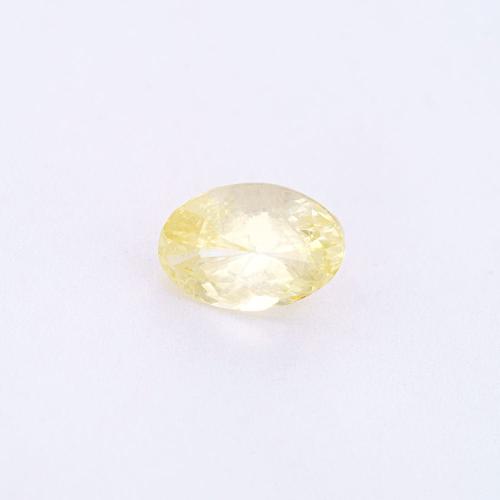
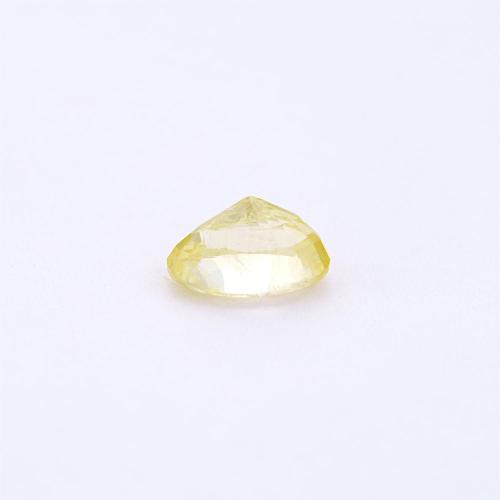
Yellow Sapphire is the yellow variety of corundum, the same mineral family that includes Ruby and Blue Sapphire.
Its yellow color can be influenced by trace elements, particularly iron.
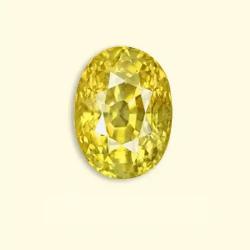
Yellow Sapphire can occur in shades ranging from:
- Pale yellow
- Lemon yellow
- Golden yellow
- Rich yellow
- Yellowish-orange
A fine Yellow Sapphire generally has an attractive combination of color, transparency, clarity, cut, and overall appearance.
Because Sapphire has a hardness of approximately 9 on the Mohs scale, Yellow Sapphire is also a durable gemstone for jewelry.
Why Is Yellow Sapphire Called Pukhraj?
In India, Yellow Sapphire is commonly known as Pukhraj or Pukhraj Stone.
The name is particularly familiar in the context of Vedic astrology, where the gemstone is traditionally connected with Jupiter or Guru.
You may see it marketed under names such as:
- Pukhraj Stone
- Yellow Sapphire
- Pukhraj Gemstone
- Guru Ratna
- Jupiter Stone
However, buyers should verify that the gemstone being sold as Pukhraj is actually Yellow Sapphire. Other yellow gemstones, such as Citrine or Yellow Topaz, can sometimes be marketed using confusing terminology.
Which Planet Is Associated With Yellow Sapphire?
In Vedic astrology, Yellow Sapphire is traditionally associated with Jupiter (Guru or Brihaspati).
Jupiter is considered an important planet associated with:
- Knowledge
- Wisdom
- Education
- Prosperity
- Spirituality
- Expansion
- Good fortune
- Children
- Marriage
- Guidance
Because of these associations, Pukhraj is traditionally considered a gemstone of growth, knowledge, abundance, and wisdom.
Yellow Sapphire Benefits According to Astrology
1. Traditionally Associated With Prosperity
One of the main reasons Pukhraj is popular is its traditional connection with wealth and prosperity.
Jupiter is regarded as a planet of expansion and abundance in Vedic astrology. Consequently, Yellow Sapphire is traditionally believed to support:
- Financial growth
- Prosperity
- Stability
- Opportunities
- Material abundance
However, wearing Pukhraj should not be viewed as a guarantee of financial success. Financial outcomes depend on practical decisions, circumstances, and many external factors.
2. Associated With Knowledge and Wisdom
Jupiter is traditionally considered the planet of wisdom, higher learning, and guidance.
For this reason, Pukhraj is often associated with:
- Intelligence
- Education
- Learning
- Decision-making
- Knowledge
- Sound judgment
Students, teachers, academics, advisors, and professionals working in knowledge-oriented fields may particularly appreciate its traditional symbolism.
3. Traditionally Linked With Marriage
Yellow Sapphire has a particularly strong reputation in Indian astrology for its association with marriage and relationships.
Traditional Jyotish connects Jupiter with marriage-related themes, particularly in a woman's horoscope in some schools of Vedic astrology.
Pukhraj is therefore sometimes recommended with the intention of supporting:
- Marriage prospects
- Relationship stability
- Family harmony
- A positive partnership
These are traditional astrological beliefs and are not scientifically proven effects.
4. Associated With Spiritual Growth
Jupiter is also traditionally connected with spirituality, philosophy, religion, teachers, and higher knowledge.
Because of this, Yellow Sapphire can symbolically represent:
- Spiritual wisdom
- Inner growth
- Faith
- Philosophy
- Self-development
- Guidance
For people interested in spiritual traditions, Pukhraj can therefore carry meaning beyond its physical beauty.
5. Traditionally Associated With Optimism
Jupiter's symbolism is often connected with positivity, expansion, confidence, and hope.
Yellow Sapphire is consequently believed in traditional astrology to encourage:
- Optimism
- Confidence
- Positive thinking
- Generosity
- Broader perspective
Again, these should be understood as traditional associations rather than scientifically established psychological effects.
Why Is Yellow Sapphire So Popular in Vedic Astrology?
Several factors contribute to Pukhraj's popularity.
Strong Association With Jupiter
Jupiter is traditionally considered an important and generally benefic planet in Vedic astrology.
Connection With Prosperity
Its association with abundance and expansion makes it attractive to people interested in financial and professional growth.
Marriage Symbolism
Pukhraj is traditionally connected with marriage and family life.
Attractive Color
Its warm yellow-to-golden appearance makes it visually appealing.
High Durability
As a Sapphire, it has excellent hardness and can be suitable for regular jewelry use.
What Is the Best Color for Yellow Sapphire?
Color is one of the most important factors when evaluating a Yellow Sapphire.
Desirable stones can display:
- Bright yellow
- Rich golden yellow
- Vivid yellow
- Slightly orange-yellow
Very pale stones may have less visual intensity, while extremely dark stones can sometimes appear less lively.
The best choice depends on the stone's overall appearance rather than color alone.
Does a Darker Yellow Sapphire Mean Better Quality?
Not necessarily.
A common misconception is that the darkest yellow Pukhraj is automatically the most valuable.
In reality, gemstone quality depends on several factors, including:
- Hue
- Tone
- Saturation
- Clarity
- Transparency
- Cut
- Size
- Treatment
- Natural or synthetic origin
A bright, attractive yellow with good transparency may be more desirable than an extremely dark but dull stone.
Popular Origins of Yellow Sapphire
Yellow Sapphire can be found in several gemstone-producing regions.
Important sources include:
- Sri Lanka
- Madagascar
- Tanzania
- Thailand
- Myanmar
- Australia
Sri Lankan Yellow Sapphires are particularly well known in the international gemstone market.
However, origin alone does not determine quality.
A gemstone from a famous location is not automatically superior to a gemstone from another source. The actual characteristics of the individual stone should always be evaluated.
Natural vs Synthetic Yellow Sapphire
When buying Pukhraj, one of the most important questions is whether the stone is natural or laboratory-created.
Natural Yellow Sapphire
Naturally formed in the Earth through geological processes.
Synthetic Yellow Sapphire
Laboratory-grown material with essentially the same chemical and crystal characteristics as natural Sapphire.
Imitation
A different material made to look like Yellow Sapphire.
For an expensive Pukhraj, buyers should request documentation that clearly identifies the gemstone.
Is Yellow Sapphire Usually Treated?
Some Yellow Sapphires can undergo treatments to improve their appearance.
Heat treatment is a recognized gemstone treatment and can affect:
- Color
- Clarity
- Value
- Market desirability
Because treatment can influence a gemstone's price, sellers should clearly disclose it.
If you're buying Pukhraj specifically for astrological purposes, ask whether the gemstone is:
Natural + untreated, natural + treated, or synthetic.
Do not assume that every natural Yellow Sapphire is untreated.
Why Certification Matters When Buying Pukhraj
A laboratory report can help verify important characteristics of a gemstone.
Depending on the laboratory and report, it may identify:
- Natural or synthetic origin
- Gemstone variety
- Treatment
- Weight
- Measurements
- Other identifying characteristics
Certification becomes especially important when a seller claims that a Pukhraj is:
- Natural
- Untreated
- Rare
- High quality
- From a premium origin
A certificate does not necessarily mean a stone is exceptionally valuable, but it can provide important information for making an informed purchase.
Who Should Wear Yellow Sapphire?
According to traditional Vedic astrology, Pukhraj should ideally be recommended after examining an individual's birth chart.
An astrologer may consider:
- Ascendant
- Jupiter's placement
- Jupiter's strength
- Houses ruled by Jupiter
- Planetary aspects
- Current planetary periods
- Overall horoscope compatibility
Therefore, Yellow Sapphire is not traditionally recommended simply because someone likes its color or because it is associated with a particular birth month.
How Is Pukhraj Traditionally Worn?
Traditional Vedic gemstone practices commonly associate Yellow Sapphire with:
- Planet: Jupiter (Guru)
- Finger: Index finger
- Metal: Gold is traditionally preferred
- Day: Thursday
Some traditions recommend specific rituals before wearing the gemstone.
Practices vary between astrologers and schools of Jyotish, so anyone choosing Pukhraj specifically for astrology should follow advice appropriate to their individual birth chart.
Can Yellow Sapphire Be Worn Every Day?
Yes. From a gemological perspective, Yellow Sapphire is well suited to regular jewelry use because Sapphire has a hardness of approximately 9 on the Mohs scale.
However, even durable gemstones can be damaged by strong impacts.
Take care when wearing a Yellow Sapphire ring during:
- Heavy physical work
- Sports
- Gardening
- Construction work
- Activities involving hard impacts
Yellow Sapphire and Health: What Does Science Say?
Traditional gemstone practices sometimes attribute physical and emotional benefits to Pukhraj.
However, there is no established scientific evidence that wearing Yellow Sapphire can prevent or cure medical conditions.
It should not be used as a replacement for:
- Medical diagnosis
- Prescribed treatment
- Medication
- Professional healthcare
The gemstone can certainly have personal, cultural, or spiritual meaning, but health claims should be approached critically.
Yellow Sapphire vs Yellow Topaz vs Citrine
These gemstones are sometimes confused because of their similar yellow appearance.
| Feature | Yellow Sapphire | Yellow Topaz | Citrine |
|---|---|---|---|
| Mineral | Corundum | Topaz | Quartz |
| Hardness | 9 | 8 | 7 |
| Typical Color | Yellow to golden yellow | Yellow, golden, orange | Yellow to orange |
| Traditional Jyotish Association | Jupiter | Often marketed as an alternative, but not equivalent | Not equivalent to Pukhraj |
| Relative Rarity | Higher | Generally more available | Generally more available |
Important: Yellow Topaz and Citrine should not automatically be represented as genuine Yellow Sapphire.
How Much Does Yellow Sapphire Cost?
There is no universal price for Pukhraj.
Price can vary substantially depending on:
- Natural or synthetic origin
- Color
- Clarity
- Transparency
- Carat weight
- Treatment
- Origin
- Cut
- Certification
Fine natural Yellow Sapphire can be significantly more expensive than commercial-quality or treated material.
For this reason, avoid choosing Pukhraj based solely on price per carat.
A properly documented stone with attractive color and good transparency may be worth considerably more than a larger stone of inferior quality.
Common Mistakes When Buying Pukhraj
Mistake 1: Assuming Every Yellow Stone Is Pukhraj
Citrine, Yellow Topaz, synthetic Sapphire, glass, and other materials can resemble Yellow Sapphire.
Always verify gemstone identity.
Mistake 2: Choosing Only by Size
A larger stone isn't necessarily better.
Color, transparency, clarity, treatment, and overall beauty matter.
Mistake 3: Ignoring Treatment
A treated gemstone should not be sold as untreated natural Sapphire.
Mistake 4: Buying Based on Astrology Alone
Astrological suitability and gemological quality are two different questions.
A stone can be astrologically recommended according to tradition but still be a poor-quality gemstone from a purchasing perspective.
Mistake 5: Skipping Certification
For expensive Pukhraj, a reputable laboratory report can provide much-needed confidence.
How to Care for Yellow Sapphire Jewelry
Yellow Sapphire is relatively easy to maintain.
Clean Gently
Use:
- Mild soap
- Lukewarm water
- Soft brush
- Soft cloth
Avoid Strong Chemicals
Keep the gemstone away from harsh cleaning products and unnecessary chemical exposure.
Store Separately
Although Sapphire is durable, it can scratch softer gemstones. Store jewelry separately when possible.
Check the Setting
If you wear Pukhraj as a ring, periodically check whether the gemstone is securely held by its setting.
Frequently Asked Questions
What are the benefits of Yellow Sapphire?
Traditionally, Pukhraj is associated with prosperity, wisdom, knowledge, marriage, optimism, spiritual growth, and good fortune. These are astrological beliefs rather than scientifically established effects.
Which planet does Yellow Sapphire represent?
In Vedic astrology, Yellow Sapphire represents Jupiter (Guru or Brihaspati).
Why is Pukhraj recommended for marriage?
Jupiter has traditional associations with marriage, wisdom, family, and guidance. Consequently, some astrologers recommend Yellow Sapphire when Jupiter is considered favorable in a person's birth chart.
Can Yellow Sapphire bring wealth?
Traditional astrology associates Pukhraj with prosperity and abundance. However, there is no scientific evidence that wearing the gemstone directly creates wealth.
Is Pukhraj suitable for everyone?
Traditional Jyotish generally recommends Yellow Sapphire based on an individual's birth chart rather than universally for everyone.
Which Yellow Sapphire is best?
A high-quality natural Yellow Sapphire with attractive color, good transparency, desirable clarity, appropriate cut, and reliable treatment documentation is generally preferable.
Is Sri Lankan Yellow Sapphire good?
Sri Lanka is a well-known source of Yellow Sapphire, but origin alone does not guarantee quality. The characteristics of the individual gemstone should be evaluated.
Is Yellow Topaz the same as Yellow Sapphire?
No. Yellow Topaz and Yellow Sapphire are different minerals with different physical properties. They should not be treated as identical gemstones.
Can Yellow Sapphire be worn every day?
Yes. Its high hardness makes it suitable for regular jewelry wear, although strong impacts and harsh chemicals should still be avoided.
Conclusion
Yellow Sapphire, or Pukhraj Stone, has earned its popularity through a combination of striking natural beauty, durability, rarity, and deep-rooted astrological tradition.
In Vedic astrology, Pukhraj is associated with Jupiter (Guru), the planet traditionally connected with wisdom, prosperity, education, marriage, spirituality, and expansion. This is why it is often considered one of the most important gemstones in traditional Jyotish.
At the same time, it is important to distinguish traditional belief from scientific evidence. There is no established scientific proof that Yellow Sapphire can directly change destiny, attract wealth, improve marriage prospects, or produce physical healing.
For buyers, the most practical approach is to focus on the gemstone's measurable characteristics: natural or synthetic origin, color, clarity, transparency, treatment, cut, carat weight, origin, and certification.
If you're purchasing Pukhraj for astrological purposes, have its suitability evaluated according to your individual birth chart and make sure the gemstone itself is properly identified and documented.
Whether you choose Yellow Sapphire for its traditional connection with Jupiter or simply because you love its warm golden color, a well-selected Pukhraj can be a beautiful and meaningful addition to a gemstone collection or jewelry wardrobe.
Share this post:
You Might Also Be Interested In
Discover more insightful articles related to this topic to deepen your gemstone knowledge.
12 June
Hessonite Gemstone Benefits: Why Astrologers Recommend Gomed Stone
Gemstones have played an important role in astrology and spiritual traditions for centuries. Among these...
20 June
How to Identify a Genuine Amethyst Stone
Amethyst is one of the most popular and widely recognized gemstones in the world. Known...

29 April
How to Wear Hessonite Garnet?
The Hessonite Garnet gemstone, also known as Gomed Ratna in Vedic astrology. The planet Rahu,...

2 April
Chaitra Navratri 2022: Attract blessing with these 9 gemstone and 9 avatars of Maa Durga
Navratri is said to offer freedom from all kinds of problems, deep relaxation, and creativity...
29 June
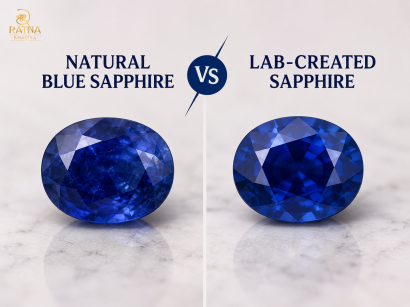
Natural Blue Sapphire vs Lab-Created Sapphire: What's the Difference?
Blue Sapphire is one of the world's most admired gemstones, prized for its rich blue...
21 March
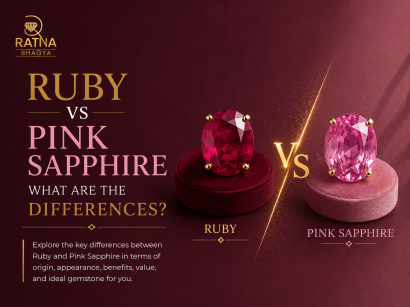
Ruby vs Pink Sapphire: What are the differences?
The mineral Corundum, which is a crystalline variant of aluminium oxide, is found in both...