845, Ground Floor, Udyog Vihar Phase V, Sector 19, Gurugram, Haryana 122016
GET DIRECTION
How to Identify a Genuine Cat's Eye Stone
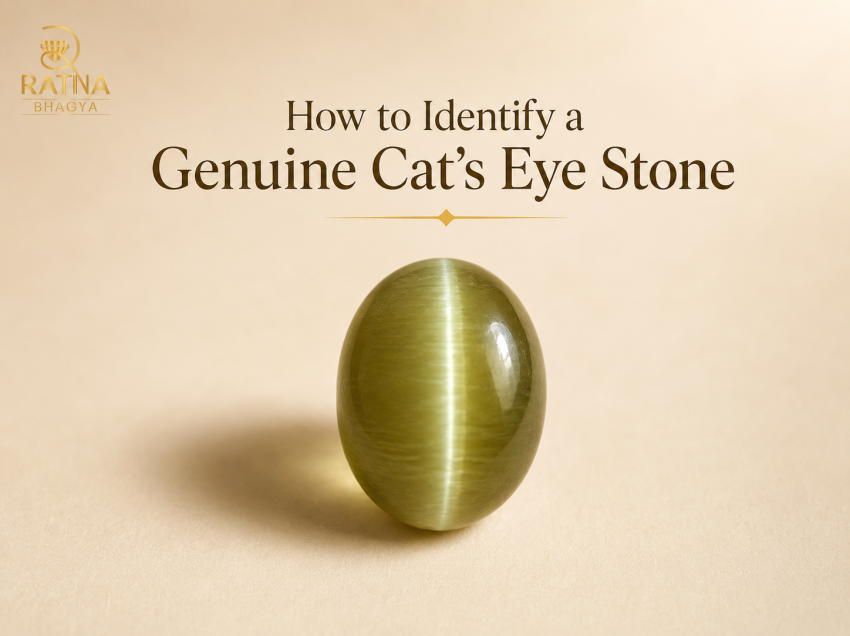
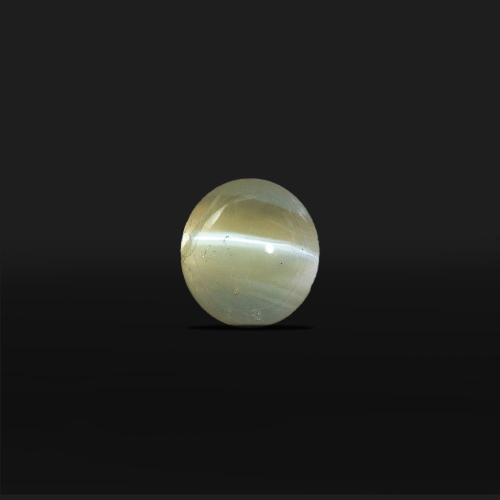
Cat's Eye Stone, traditionally known as Lehsunia or Vaidurya in India, is one of the most distinctive gemstones in the world. It is famous for a striking optical effect that resembles the narrow slit of a cat's eye when light moves across its surface.
Because of its unique appearance and traditional astrological significance, Cat's Eye is highly sought after by gemstone enthusiasts and jewelry buyers. However, the market also contains imitation stones, synthetic materials, and other gemstones that may look similar.
If you're planning to buy Cat's Eye, learning how to identify its characteristics can help you make a more informed decision. In this guide, we'll explain how genuine Cat's Eye looks, what creates its famous chatoyancy, how to distinguish natural stones from imitations, and why professional certification is important.
Note: Visual and at-home observations can provide useful clues but cannot definitively prove authenticity. For an expensive Cat's Eye, professional gemological testing and certification are the most reliable ways to verify the stone.
What Is Cat's Eye Stone?
The name Cat's Eye can refer to gemstones that display an optical phenomenon called chatoyancy. The term comes from the French word chatoyer, meaning "to shine like a cat's eye."
The most important gemstone associated with the name is Chrysoberyl Cat's Eye. Chrysoberyl is a separate mineral species from quartz and is prized for its strong, sharp chatoyant band.
In the Indian gemstone market, however, the term Cat's Eye may also be used for Quartz Cat's Eye and other chatoyant materials. This distinction is important when comparing quality and price.
Chrysoberyl Cat's Eye is generally rarer and more valuable than Quartz Cat's Eye.
What Makes a Genuine Cat's Eye Unique?
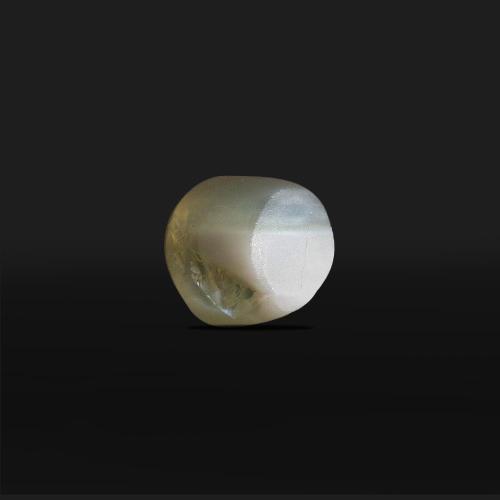
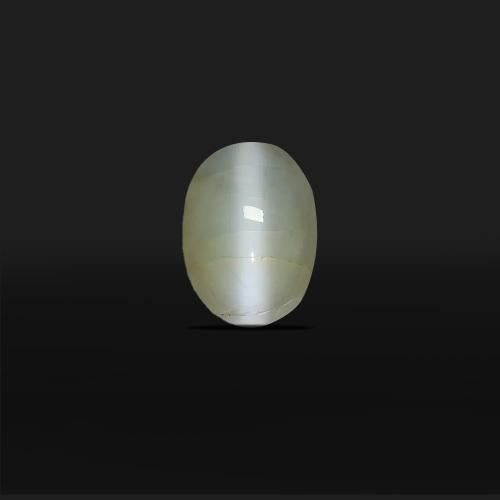
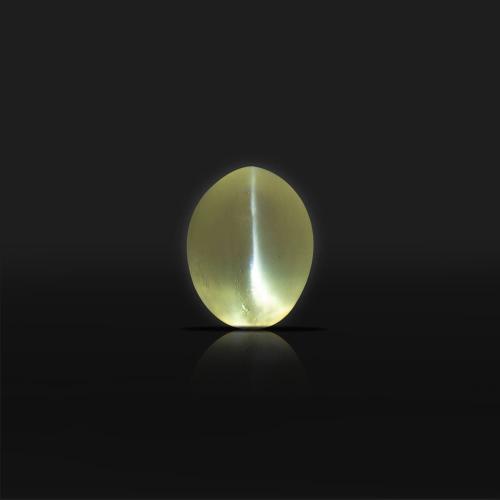
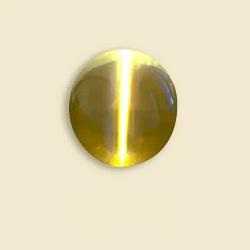
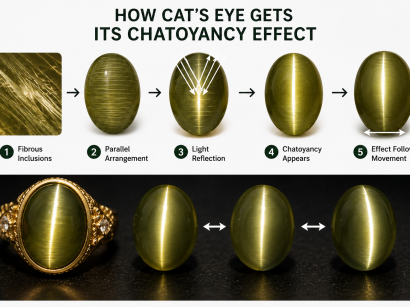
The defining feature of a quality Cat's Eye is its chatoyancy.
When a narrow beam of light appears to glide across the surface of the gemstone as it is rotated, it creates the characteristic cat-eye effect.
A fine Cat's Eye typically displays:
- A distinct central light band
- Strong contrast between the band and body color
- A smooth-looking movement of the band
- Good transparency
- Attractive luster
The quality of this effect is one of the most important factors in determining value.
1. Look for a Sharp Chatoyant Band
The first thing to examine is the eye itself.
A high-quality Cat's Eye generally has a well-defined, narrow band running across the center of the stone.
As the gemstone moves, the band should appear to travel smoothly across its surface.
A weak, blurry, or broken line may indicate lower quality.
However, the presence of an eye alone does not prove that the stone is natural Chrysoberyl.
2. Check the "Opening and Closing" Effect
One traditional way of observing a fine Cat's Eye is to move the stone under a single light source.
As the stone rotates, the light band should appear to:
- Open
- Move
- Close
This effect is particularly noticeable in well-cut cabochons.
The movement should look natural rather than appearing as a painted or artificially fixed line.
3. Examine the Stone Under a Single Light Source
Chatoyancy is easiest to observe under a focused light source.
Try viewing the gemstone under:
- A small flashlight
- A focused lamp
- Natural daylight
Rotate the stone slowly.
A genuine chatoyant gemstone should display a moving band rather than simply showing a stationary line.
For professional identification, gemologists use specialized instruments rather than relying only on visual inspection.
4. Examine the Surface and Luster
Natural Chrysoberyl Cat's Eye generally has a vitreous to slightly greasy luster when polished.
The surface should look smooth and well polished.
Be cautious if the stone has:
- An excessively glassy appearance
- Surface scratches
- Bubbles
- Uneven polish
- An unnatural coating
These characteristics can sometimes indicate an imitation or poor-quality material.
5. Look for Natural Inclusions
Natural gemstones often contain internal characteristics formed during their geological development.
In Chrysoberyl Cat's Eye, fine needle-like inclusions can contribute to the chatoyant effect.
Under magnification, a natural stone may show:
- Fine parallel inclusions
- Internal growth features
- Small crystals
- Natural imperfections
However, inclusions alone cannot prove that a gemstone is natural. Some synthetic gemstones can contain features that imitate natural characteristics.
6. Consider the Color
Chrysoberyl Cat's Eye is commonly seen in shades such as:
- Yellow
- Golden yellow
- Greenish-yellow
- Brownish-yellow
- Honey
- Brown
Highly attractive golden-honey colors with a strong eye can be particularly desirable.
Color preference varies by buyer, but strong contrast between the body color and the chatoyant band generally enhances visual appeal.
7. Check Transparency
High-quality Cat's Eye can range from translucent to transparent depending on the material and cut.
A stone that is excessively cloudy may have lower visual quality.
However, transparency should be evaluated alongside:
- Chatoyancy
- Color
- Cut
- Inclusions
- Overall appearance
8. Pay Attention to the Cut
Cat's Eye is usually cut as a cabochon, rather than with traditional faceting.
A properly oriented cabochon allows the inclusions responsible for chatoyancy to align with the stone's surface and produce a strong eye.
An improperly oriented stone may have a weak or poorly centered effect even if the material itself is natural.
Natural Cat's Eye vs Imitation
Understanding the difference between natural, synthetic, and imitation stones is essential.
Natural Chrysoberyl Cat's Eye
- Forms naturally in geological environments
- Contains natural internal characteristics
- Displays genuine chatoyancy
- Generally more valuable
Synthetic Cat's Eye
- Created in a laboratory
- May reproduce the appearance of natural material
- Can have a strong optical effect
- Usually less expensive
Imitation Cat's Eye
May be made from:
- Glass
- Fiber-optic material
- Other artificial substances
These materials can create an attractive cat-eye effect but are not genuine Chrysoberyl.
Can the Flashlight Test Prove a Cat's Eye Is Genuine?
No.
A flashlight can help you observe chatoyancy, but it cannot establish whether the stone is natural Chrysoberyl.
Some synthetic and imitation materials can also display a convincing cat-eye effect.
Therefore, use visual tests only as preliminary observations.
For an expensive gemstone, always obtain a professional laboratory report.
Certification: The Safest Way to Verify Cat's Eye
A gemstone certificate from a reputable gemological laboratory can provide important information about:
- Gemstone identity
- Natural or synthetic origin
- Treatment status
- Weight
- Measurements
- Relevant gemological characteristics
If you're purchasing a valuable Chrysoberyl Cat's Eye, certification is particularly important because the name "Cat's Eye" is also used commercially for other chatoyant materials.
A report can help establish exactly what gemstone you're buying.
Why Is Chrysoberyl Cat's Eye More Valuable?
Not every gemstone displaying chatoyancy is Chrysoberyl.
Chrysoberyl Cat's Eye is generally more valuable because:
- Chrysoberyl itself is relatively rare.
- Strong chatoyancy is uncommon.
- Fine-quality stones are difficult to find.
- Excellent color and transparency can significantly increase value.
A stone marketed simply as "Cat's Eye" should therefore be examined carefully to determine its actual mineral identity.
Factors That Affect Cat's Eye Value
Several characteristics influence price.
Strength of the Eye
A sharp, well-centered band generally increases desirability.
Contrast
A strong contrast between the eye and body color makes the effect more noticeable.
Color
Attractive golden, honey, and other desirable colors can increase value.
Transparency
Better transparency and visual quality generally make a stone more desirable.
Size
Large, high-quality Chrysoberyl Cat's Eyes are relatively rare and may command premium prices.
Origin
Provenance can influence value when supported by reliable documentation, although quality remains crucial.
Certification
A reputable laboratory report can add confidence and help distinguish Chrysoberyl from other chatoyant materials.
Common Mistakes When Buying Cat's Eye
Mistake 1: Assuming Every Cat's Eye Is Chrysoberyl
This is one of the most important things to understand.
"Cat's Eye" describes an optical effect, while Chrysoberyl Cat's Eye identifies a particular gemstone.
Always ask the seller for the exact gemstone species.
Mistake 2: Buying Only Because the Eye Looks Strong
A dramatic eye can be attractive, but it does not automatically mean the stone is natural or valuable.
Always verify:
- Mineral identity
- Origin
- Treatments
- Certification
Mistake 3: Buying an Uncertified Expensive Stone
If a stone is being sold at a premium price, insist on a reputable gemological report.
Mistake 4: Believing Home Tests Are Conclusive
Scratch tests, rubbing tests, or other internet "hacks" can damage the gemstone and are not reliable substitutes for laboratory testing.
Mistake 5: Choosing Based Only on Astrological Claims
Traditional Vedic astrology associates Cat's Eye, or Lehsunia, with Ketu. Astrologers may recommend it based on an individual's birth chart.
However, astrological suitability is a matter of traditional belief and should not be confused with scientific evidence.
Cat's Eye in Vedic Astrology
In Vedic astrology, Cat's Eye is traditionally associated with Ketu, one of the lunar nodes.
It is commonly linked symbolically with:
- Spiritual awareness
- Detachment
- Intuition
- Protection
- Sudden changes
Some astrologers consider Cat's Eye a powerful gemstone and recommend wearing it only after analyzing the individual's birth chart.
If you're purchasing Cat's Eye specifically for astrology, consult a qualified astrologer and verify the gemstone's authenticity before wearing it.
How to Care for Cat's Eye Jewelry
Chrysoberyl is relatively durable, but proper care helps preserve its polish and appearance.
Cleaning
- Use lukewarm water.
- Add mild soap if necessary.
- Gently clean with a soft cloth.
- Dry thoroughly after cleaning.
Avoid
- Harsh chemicals
- Abrasive materials
- Strong impacts
- Unnecessary exposure to extreme heat
If the stone has undergone a treatment, follow the care instructions provided by the jeweler or laboratory.
Frequently Asked Questions (FAQs)
How can I identify a genuine Cat's Eye Stone?
Look for a natural-looking, sharp chatoyant band that moves across the surface as the stone is rotated. However, visual inspection alone cannot confirm authenticity. A professional gemological report is the safest method.
Is every Cat's Eye made from Chrysoberyl?
No. Several gemstones and materials can display chatoyancy. When buying a valuable stone, specifically ask whether it is Chrysoberyl Cat's Eye.
How can I test Cat's Eye at home?
You can observe its chatoyancy under a focused light source, but home tests cannot reliably establish whether it is natural Chrysoberyl. Avoid scratch or destructive tests.
What is the most valuable Cat's Eye?
Fine-quality Chrysoberyl Cat's Eye with a strong, sharp, centered eye, attractive color, good transparency, and excellent overall quality is generally among the most valuable cat-eye gemstones.
Is Cat's Eye used in astrology?
Yes. In Vedic astrology, Cat's Eye or Lehsunia is traditionally associated with Ketu. Astrological suitability is generally determined through birth-chart analysis.
Should I buy a certified Cat's Eye?
Absolutely, especially for a high-value purchase. Certification helps establish the gemstone's identity, natural or synthetic status, and treatment information.
Conclusion
Identifying a genuine Cat's Eye Stone requires more than simply looking for a bright line across the gemstone. The famous chatoyancy effect is an important characteristic, but several materials—including synthetic and imitation stones—can produce a similar appearance.
If you're looking for a genuine Chrysoberyl Cat's Eye, pay attention to the quality of its eye, color, transparency, cut, and natural internal characteristics. Most importantly, ask for a reputable gemological certificate that identifies the gemstone and discloses any treatments.
Whether you appreciate Cat's Eye for its fascinating optical effect, jewelry appeal, or traditional astrological significance, understanding what you're buying is the best way to make a confident and informed gemstone purchase.
Share this post:
You Might Also Be Interested In
Discover more insightful articles related to this topic to deepen your gemstone knowledge.
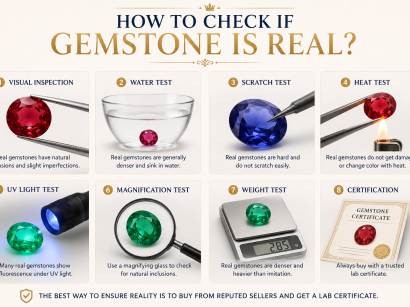
2 April
HOW TO CHECK IF GEMSTONE IS REAL?
Gemstones are expensive because they are uncommon, valuable, and attractive. They're worn as jewellery and...
6 August
Garnet Stone Benefits: Symbolism and Modern Uses
The Garnet Stone is one of the oldest and most admired gemstones in history, celebrated...
21 March
Ruby vs Pink Sapphire: What are the differences?
The mineral Corundum, which is a crystalline variant of aluminium oxide, is found in both...
17 June
How to Check If a Red Coral Stone Is Real or Fake
Red Coral (Moonga) is one of the most popular gemstones in Vedic astrology, valued for...
19 June
How Cat's Eye Gets Its Unique Chatoyancy Effect
The Cat's Eye gemstone (Lehsunia) is one of the most fascinating gems in the world,...
1 July
Who Should Wear Cat's Eye Gemstone?
The Cat's Eye gemstone, popularly known as Lehsunia or Vaidurya, is one of the most...