845, Ground Floor, Udyog Vihar Phase V, Sector 19, Gurugram, Haryana 122016
GET DIRECTION
Turquoise Stone Benefits: Meaning and Cultural Significance
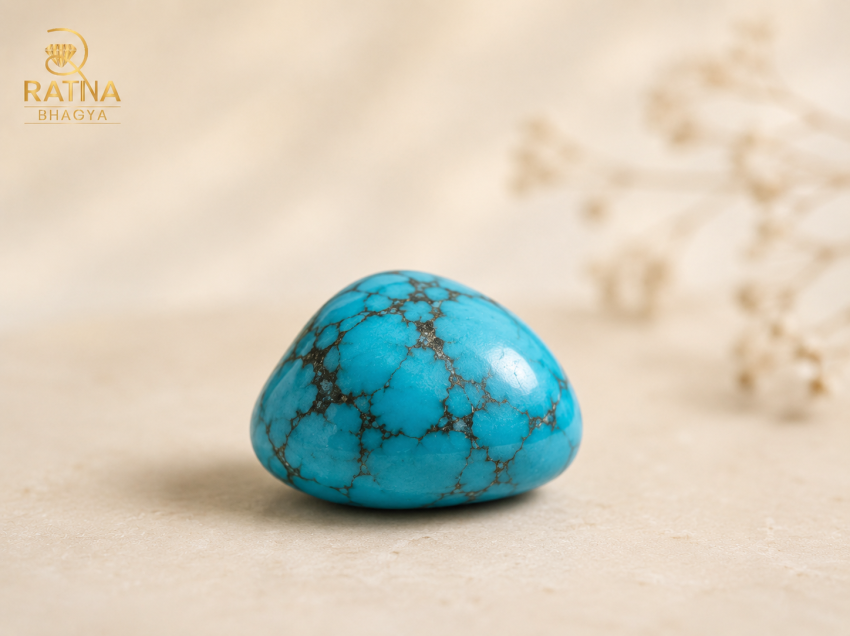
Turquoise Stone is one of the world's oldest decorative gemstones, admired for its distinctive blue-to-green color and rich cultural history. For thousands of years, turquoise has been used in jewelry, ornaments, amulets, and ceremonial objects across civilizations.
Often associated with protection, good fortune, peace, friendship, and spiritual connection, Turquoise continues to be popular among jewelry lovers and gemstone collectors today. Its unique color and cultural significance make it much more than a beautiful stone.
In this guide, we'll explore the meaning of Turquoise Stone, its traditional benefits, cultural significance, varieties, uses, and tips for choosing and caring for genuine Turquoise.
Disclaimer: The symbolic, spiritual, and traditional benefits discussed in this article are based on cultural beliefs and historical traditions. There is no scientific evidence that wearing Turquoise directly causes health, financial, emotional, or other life benefits.
What Is Turquoise Stone?
Turquoise is an opaque, hydrated phosphate mineral that typically occurs in shades ranging from blue to green.
Its color can vary depending on its chemical composition. Copper is primarily responsible for its blue and green coloration, while iron can contribute to greener tones.
Turquoise is relatively soft compared with many precious gemstones, with a hardness of approximately 5–6 on the Mohs scale.
Major historical and modern sources include:
- Iran (Persia)
- United States
- China
- Egypt
- Mexico
- Chile
Persian Turquoise has a particularly long-standing reputation for its beautiful blue color and historical importance.
Turquoise Stone Meaning
Turquoise has carried different meanings across cultures, but several themes appear repeatedly.
It has traditionally symbolized:
- Protection
- Peace
- Friendship
- Good fortune
- Healing
- Wisdom
- Spiritual connection
- Positive energy
Its blue-green color is often associated with the sky, water, and nature, contributing to its calming and spiritual symbolism.
Traditional Turquoise Stone Benefits
1. Symbol of Protection
One of the oldest beliefs surrounding Turquoise is its association with protection.
Various cultures historically used Turquoise as a protective ornament or amulet. Travelers, warriors, and spiritual practitioners have all been associated with its use throughout history.
Today, many people wear Turquoise as a symbolic reminder of:
- Safety
- Strength
- Confidence
- Protection during life's journey
These associations are cultural rather than scientifically proven.
2. Associated with Peace and Calmness
Turquoise's soothing blue-green appearance has traditionally been connected with peace and tranquility.
It is often viewed as a symbol of:
- Calmness
- Emotional balance
- Relaxation
- Harmony
Its color makes Turquoise especially appealing for people who prefer gemstones with a peaceful and natural appearance.
3. Symbol of Friendship and Loyalty
Turquoise has long been associated with meaningful relationships.
In various traditions, it has been exchanged as a gift representing:
- Friendship
- Trust
- Loyalty
- Affection
- Lasting relationships
This makes Turquoise jewelry a thoughtful choice for birthdays, anniversaries, and other special occasions.
4. Traditionally Linked with Good Fortune
Turquoise has often been regarded as a lucky or auspicious stone.
Historically, people have carried or worn it as a symbol of:
- Good luck
- Prosperity
- Positive opportunities
- Success
- Safe journeys
While these beliefs have no scientific basis, they remain an important part of Turquoise's cultural heritage.
5. Represents Wisdom and Spiritual Awareness
Turquoise has been valued by many spiritual traditions and has appeared in religious and ceremonial objects.
It is often symbolically associated with:
- Wisdom
- Inner awareness
- Spiritual growth
- Intuition
- Connection with nature
For modern wearers, it can serve as a personal symbol of mindfulness and self-reflection.
Cultural Significance of Turquoise
Turquoise has one of the richest cultural histories among decorative gemstones.
Ancient Egypt
Turquoise was highly valued in ancient Egypt and was used in:
- Jewelry
- Burial objects
- Decorative pieces
- Ceremonial items
Some of the earliest known turquoise mining activity is associated with Egypt's Sinai Peninsula.
Persian Culture
Persian Turquoise has been treasured for centuries and historically came from the region around Nishapur.
It became especially famous for its intense blue color and was used extensively in:
- Jewelry
- Architecture
- Religious objects
- Decorative arts
The distinctive Persian style of turquoise continues to influence gemstone design today.
Native American Traditions
Turquoise has deep cultural significance among several Indigenous peoples of North America.
It has been used in:
- Jewelry
- Ceremonial objects
- Art
- Traditional adornments
Different communities have their own meanings and traditions surrounding Turquoise, so it is important not to treat all Indigenous traditions as identical.
Tibetan Culture
Turquoise has historically held an important place in Tibetan jewelry and cultural traditions.
It has been incorporated into:
- Necklaces
- Amulets
- Ritual objects
- Traditional adornments
Its blue-green color has been associated with spiritual and cultural symbolism.
Turquoise in Modern Jewelry
Today, Turquoise remains a popular choice for both traditional and contemporary jewelry.
It is commonly used in:
- Rings
- Bracelets
- Necklaces
- Pendants
- Earrings
- Men's jewelry
- Statement jewelry
Its opaque appearance allows jewelry designers to create bold pieces that stand out from traditional transparent gemstones.
Popular Types of Turquoise
Turquoise is available in several varieties based on geographical origin, color, matrix pattern, and quality.
Persian Turquoise
Historically associated with Iran, Persian Turquoise is admired for its vivid blue color and cultural heritage.
Sleeping Beauty Turquoise
Historically mined in Arizona, this turquoise became known for its relatively uniform blue color and minimal matrix.
Chinese Turquoise
Chinese Turquoise occurs in a range of blue and green shades and may display attractive matrix patterns.
American Turquoise
The United States has produced turquoise from several mining regions, particularly in the American Southwest.
Different mines can produce stones with distinctive colors, patterns, hardness, and matrix characteristics.
What Is Turquoise Matrix?
One of the most recognizable features of Turquoise is its matrix.
Matrix refers to the patterns of surrounding host rock or mineral material that may remain visible within the gemstone.
It can appear as:
- Brown lines
- Black webbing
- Gray patterns
- Spiderweb-like designs
Some buyers prefer clean, matrix-free Turquoise, while others specifically seek stones with attractive spiderweb matrix.
The presence of matrix does not automatically mean that Turquoise is low quality.
Natural vs Treated Turquoise
Turquoise can be treated to improve its durability, color, or appearance.
Common categories include:
Natural Turquoise
Stone that has not undergone significant stabilization or enhancement.
Stabilized Turquoise
Porous Turquoise may be treated with a bonding substance to improve durability and make it more suitable for jewelry.
Reconstituted Turquoise
Small pieces or turquoise material may be processed and bonded together to create a usable gemstone material.
Imitation Turquoise
Materials such as dyed howlite, plastic, glass, or other substances may be sold to resemble Turquoise.
When purchasing valuable Turquoise, always ask the seller whether the stone is natural, stabilized, reconstituted, or imitation.
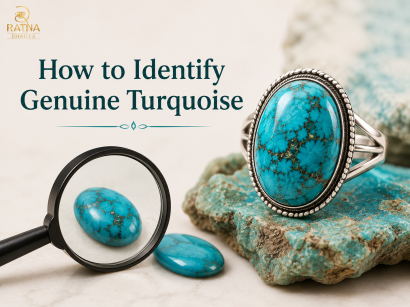
How to Choose Genuine Turquoise
Check the Color
Natural Turquoise commonly occurs in:
- Sky blue
- Blue
- Blue-green
- Green
Extremely uniform or unnaturally vivid color may warrant further examination.
Examine the Matrix
Natural Turquoise may display irregular matrix patterns.
However, matrix patterns alone cannot prove authenticity because imitations can be manufactured to resemble natural Turquoise.
Ask About Treatment
Always ask whether the stone has been:
- Stabilized
- Dyed
- Reconstituted
- Otherwise treated
Treatments are not necessarily undesirable, but they should be disclosed.
Request Certification for Valuable Stones
For expensive Turquoise, a professional gemological report can provide greater confidence about:
- Gemstone identity
- Treatment
- Natural or synthetic/imitation status
- Other relevant characteristics
How to Care for Turquoise Jewelry
Turquoise requires more care than harder gemstones such as Sapphire or Diamond.
Keep It Away from Chemicals
Avoid contact with:
- Perfume
- Hairspray
- Cosmetics
- Household cleaners
- Chlorinated water
- Strong detergents
Avoid Excessive Moisture
Turquoise can be porous, particularly when untreated. Prolonged exposure to water or chemicals may affect its appearance.
Clean Gently
Use a soft, slightly damp cloth to wipe the stone.
Avoid:
- Ultrasonic cleaners
- Steam cleaners
- Harsh chemicals
- Abrasive brushes
Store Separately
Keep Turquoise in a soft pouch or lined jewelry box away from harder gemstones.
Turquoise as a Meaningful Gift
Because of its traditional associations with protection, friendship, peace, and good fortune, Turquoise can make a thoughtful gift for:
- Birthdays
- Anniversaries
- Graduations
- Travel milestones
- Friendship celebrations
- Personal achievements
Its distinctive blue-green color also makes it suitable for both men's and women's jewelry.
Frequently Asked Questions (FAQs)
What does Turquoise Stone symbolize?
Turquoise traditionally symbolizes protection, peace, friendship, good fortune, wisdom, and spiritual awareness.
Is Turquoise a precious gemstone?
Turquoise is generally classified as a semi-precious or ornamental gemstone, rather than one of the traditional precious gemstones such as Diamond, Ruby, Sapphire, and Emerald.
Why does Turquoise have black or brown lines?
These patterns are called matrix and may represent remnants of the host rock in which the Turquoise formed.
Is natural Turquoise better than treated Turquoise?
Natural Turquoise is generally rarer, but stabilized Turquoise can offer greater durability for everyday jewelry. The best choice depends on your preferences, budget, and intended use.
Can Turquoise be worn every day?
It can be worn regularly with care, but its relatively low hardness and potential porosity mean it should be protected from scratches, chemicals, moisture, and strong impacts.
How can I tell if Turquoise is genuine?
Color, matrix, texture, and overall appearance can provide clues, but these observations cannot reliably establish authenticity. For valuable purchases, professional gemological testing is recommended.
Conclusion
Turquoise Stone is a gemstone with an extraordinary combination of natural beauty, history, and cultural meaning. From ancient Egypt and Persia to Indigenous traditions in North America and Tibetan culture, Turquoise has been treasured for thousands of years as jewelry, ornament, and a symbol of protection and connection.
Its distinctive blue-green color and unique matrix patterns make every piece different. Traditionally associated with peace, friendship, wisdom, good fortune, and protection, Turquoise continues to hold a special place in modern jewelry.
If you're considering buying Turquoise, look beyond its color alone. Understanding its origin, matrix, treatment, durability, and authenticity will help you choose a gemstone that suits your needs and budget.
Whether you wear it for its cultural symbolism or simply admire its beautiful natural color, a well-cared-for Turquoise piece can remain a distinctive and meaningful part of a jewelry collection for years to come.
Share this post:
You Might Also Be Interested In
Discover more insightful articles related to this topic to deepen your gemstone knowledge.
9 March
Top 17 Benefits of Ruby Gemstone
Ruby is a type of Aluminum Oxide (Red Corundum). It is composed of Corundum (Al2O3),...
11 April
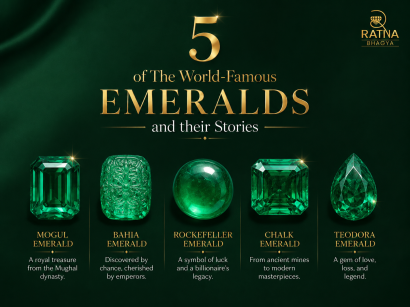
5 of The World-Famous Emeralds and their Stories
For thousands of years, emeralds have attracted a lot of attention and devotion. From Queen...
1 April
FREQUENTLY ASKED QUESTIONS ABOUT YELLOW SAPPHIRE
What Is Yellow Sapphire? A yellow sapphire is a form of corundum mineral that is...
18 June
Freshwater vs Cultured Pearl Stone: What's the Difference?
Pearls have long been admired for their timeless elegance, natural beauty, and symbolic association with...
6 August
Garnet Stone Benefits: Symbolism and Modern Uses
The Garnet Stone is one of the oldest and most admired gemstones in history, celebrated...
14 January
Top 10 gemstones and their health benefits
People have used gemstones for centuries now to enhance their health and extend their life...