845, Ground Floor, Udyog Vihar Phase V, Sector 19, Gurugram, Haryana 122016
GET DIRECTION
Why Green Is the Most Popular Emerald Gemstone Color
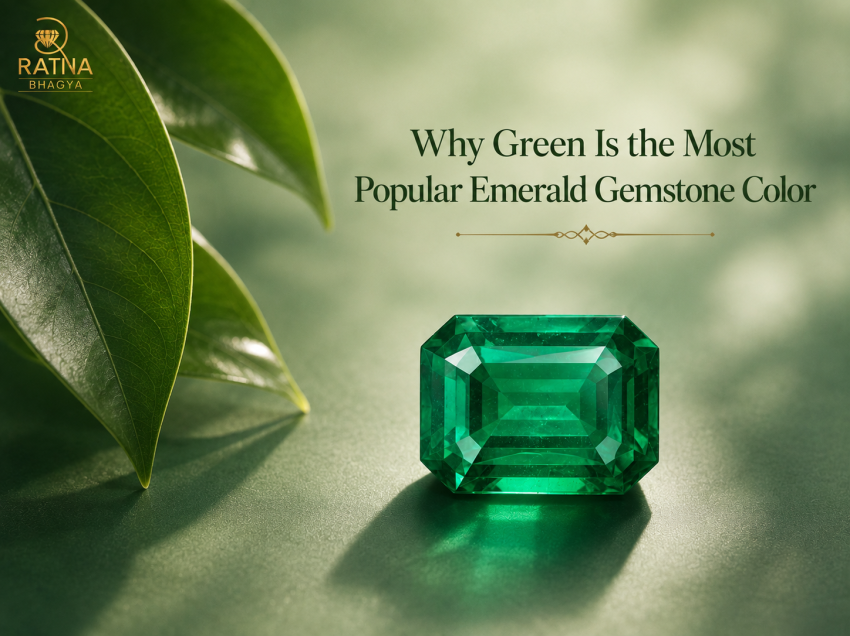
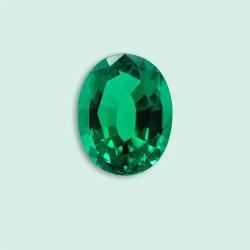
When people hear the word Emerald, the first image that usually comes to mind is a rich, elegant green gemstone. Unlike many gemstones that are recognized by a broad range of colors, Emerald has a particularly strong identity with green. In fact, green is not simply one of the colors associated with Emerald—it is the defining characteristic of the gemstone.
Emerald belongs to the beryl mineral family, and its distinctive green color is primarily associated with trace amounts of chromium, vanadium, or a combination of both. The most desirable Emeralds can display an intense, vivid green color that gives the gemstone its exceptional beauty and market appeal.
But why is green so important to Emeralds? What makes one shade of green more desirable than another? And how do factors such as tone, saturation, clarity, and origin affect an Emerald's appearance and value?
Let's explore the science, symbolism, and buying considerations behind the world's most iconic green gemstone.
Note: Emerald quality and value depend on multiple factors, including color, clarity, transparency, treatment, origin, size, and overall appearance. Color preferences can also vary among buyers and markets.
What Makes Emerald Green?
Emerald is a variety of beryl, a mineral that is naturally colorless in its pure form.
Its famous green color develops because of trace elements incorporated into the crystal structure during formation.
The most important coloring elements can include:
- Chromium
- Vanadium
- Sometimes iron
The exact combination and concentration of these elements can influence the gemstone's shade and intensity.
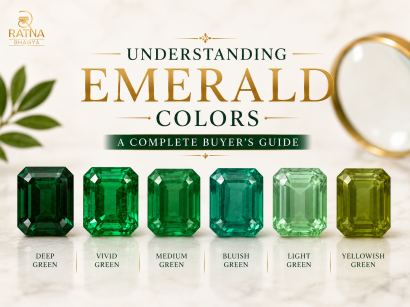
This is why Emeralds can range from:
- Light green
- Yellowish green
- Bluish green
- Medium green
- Deep green
- Vivid saturated green
Why Is Green the Defining Color of Emerald?
Unlike many gemstones that have several recognized color varieties, the term Emerald specifically refers to the green variety of beryl.
Other beryl varieties have different names:
- Blue beryl → Aquamarine
- Pink beryl → Morganite
- Golden/yellow beryl → Heliodor
- Colorless beryl → Goshenite
Therefore, the green color isn't simply a popular choice for Emerald—it is what makes a green beryl an Emerald.
What Is the Most Desirable Emerald Green?
There is no single shade that every buyer will consider perfect, but strong, vivid green with good saturation and an attractive medium-to-medium-dark tone is widely regarded as highly desirable.
Fine Emerald color is often described using three major characteristics:
Hue
Hue describes the basic color of the gemstone.
For Emerald, the primary hue is green, although slight blue or yellow modifiers can occur.
Tone
Tone refers to how light or dark the green appears.
An Emerald can range from:
- Very light
- Light
- Medium
- Medium-dark
- Very dark
Extremely light stones may have less visual intensity, while extremely dark stones can sometimes lose brightness.
Saturation
Saturation describes the strength or intensity of the color.
A highly saturated Emerald can display a rich, lively green that immediately attracts attention.
Why Vivid Green Emeralds Are So Popular
The appeal of a vivid green Emerald comes from its combination of:
- Strong color
- Natural transparency
- Distinctive appearance
- Historical prestige
- Rarity
A well-colored Emerald can appear exceptionally rich even when it contains visible inclusions.
This is one of the major differences between Emerald and many other transparent gemstones.
The Famous "Jardin" of Emeralds
One of the most interesting characteristics of Emerald is its inclusions.
Emeralds commonly contain internal features known as jardin, a French word meaning "garden."
Under magnification, these inclusions can resemble:
- Moss
- Leaves
- Branches
- Gardens
- Tiny clouds
These inclusions are so characteristic of Emerald that a completely flawless natural Emerald is extremely unusual.
For this reason, buyers should not automatically assume that an Emerald with inclusions is inferior or fake.
Can a Highly Included Emerald Still Be Valuable?
Yes.
Emerald value is not determined by clarity alone.
A natural Emerald with:
- Excellent green color
- Good transparency
- Attractive appearance
- Desirable size
can be highly valuable even if it contains visible inclusions.
On the other hand, a very clean Emerald with weak color may not necessarily be more desirable.
For Emeralds, color is often one of the most important considerations.
Emerald Color and Geographic Origin
Emeralds from different locations can have different appearances because of variations in their geological environments.
Some famous Emerald-producing regions include:
- Colombia
- Zambia
- Brazil
- Ethiopia
- Zimbabwe
Colombian Emeralds
Colombian Emeralds are famous for their beautiful green color and historical importance.
Some fine Colombian stones display a particularly rich, slightly bluish green appearance.
Zambian Emeralds
Zambian Emeralds are often known for strong green colors and can sometimes display a slightly bluish or cooler appearance.
Brazilian Emeralds
Brazil produces Emeralds in a variety of green shades and quality levels.
Ethiopian Emeralds
Ethiopia has emerged as an important source of Emeralds, producing stones with attractive green coloration.
However, origin alone does not determine quality. A gemstone should be evaluated based on its actual characteristics and reliable documentation.
Why Green Emerald Is More Popular Than Other Beryl Colors
The popularity of green Emerald comes from a combination of natural beauty and historical symbolism.
Green has long been associated with:
- Nature
- Growth
- Renewal
- Prosperity
- Balance
- Life
These associations complement Emerald's traditional reputation as a gemstone of wisdom, growth, and abundance.
The deep connection between green and nature may also explain why Emerald jewelry feels both luxurious and organic.
Emerald in History and Culture
Emerald has been treasured for thousands of years.
Ancient civilizations valued Emeralds for their color and rarity. Historical Emerald mining in Egypt dates back thousands of years, while Colombian Emeralds later became highly prized in Europe and beyond.
Royal families, rulers, and wealthy collectors have incorporated Emeralds into:
- Crowns
- Necklaces
- Rings
- Brooches
- Ceremonial jewelry
The gemstone's green color helped establish its association with luxury and prestige.
Emerald in Vedic Astrology
In Vedic astrology, Emerald is known as Panna and is traditionally associated with Mercury (Budh).
Mercury is traditionally linked with:
- Communication
- Intelligence
- Learning
- Business
- Analytical thinking
- Speech
Astrologers may recommend Emerald depending on the individual's birth chart.
These astrological associations are based on traditional beliefs and are not scientifically established.
Natural vs Synthetic Emerald
When shopping for an Emerald, understanding its origin is extremely important.
Natural Emerald
Forms naturally through geological processes.
Laboratory-Grown/Synthetic Emerald
Created in controlled laboratory conditions and can have essentially the same chemical and crystal characteristics as natural Emerald.
Imitation Emerald
A different material designed to resemble Emerald, such as certain types of glass or other gemstones.
A seller should clearly disclose which category the stone belongs to.
Are Emeralds Usually Treated?
Yes. Many Emeralds undergo clarity enhancement, commonly involving oils or other filling substances.
This is widely encountered in the Emerald trade.
Treatment does not automatically mean the Emerald is fake.
However, treatment level can affect:
- Value
- Durability
- Care requirements
- Market desirability
For an expensive Emerald, ask for treatment disclosure and a reputable laboratory report.
How to Choose a Beautiful Green Emerald
If you're buying an Emerald, consider these factors:
1. Color
Look for a green that is:
- Attractive
- Vivid
- Well saturated
- Neither excessively pale nor overly dark
Color should generally be your first consideration.
2. Transparency
A transparent Emerald can display greater brilliance and depth.
However, because Emeralds commonly contain inclusions, some visible internal characteristics are normal.
3. Clarity
Don't expect a natural Emerald to look like a flawless Diamond.
Instead, evaluate whether inclusions significantly affect:
- Transparency
- Durability
- Beauty
4. Cut
A good cut should maximize:
- Color
- Light return
- Face-up appearance
- Symmetry
The classic Emerald cut is particularly associated with the gemstone, although Emeralds can be fashioned into many shapes.
Why the Emerald Cut Is So Famous
The Emerald cut is a rectangular step cut with trimmed corners.
It was historically developed to protect Emerald's corners and reduce the risk of damage while cutting.
The style emphasizes:
- Color
- Clarity
- Broad reflections
- Elegant geometry
Although the cut is named after Emerald, it is also widely used for diamonds and other gemstones.
Common Mistakes When Buying Green Emerald
Mistake 1: Looking Only for Perfect Clarity
Natural Emeralds commonly have inclusions. A completely flawless-looking stone deserves careful examination because it may be synthetic, treated, or an imitation.
Mistake 2: Assuming Darker Means Better
Extremely dark color does not automatically mean higher quality.
The best Emerald is generally one with a pleasing balance of hue, tone, saturation, transparency, and brilliance.
Mistake 3: Ignoring Treatment
Always ask whether the Emerald has been treated and what type of enhancement has been used.
Mistake 4: Buying Based Only on Origin
Colombian, Zambian, or Brazilian origin can influence market appeal, but origin should not replace actual quality evaluation.
Mistake 5: Buying Without Certification
For expensive Emeralds, professional certification can help verify:
- Natural or laboratory-grown origin
- Treatment
- Gemstone identity
- Other relevant characteristics
How to Care for a Green Emerald
Emerald requires more care than Ruby or Sapphire.
Although Emerald has a hardness of approximately 7.5–8 on the Mohs scale, its inclusions and possible treatments can make it more vulnerable to damage.
Avoid:
- Harsh chemicals
- Abrasive cleaners
- Strong heat
- Sudden temperature changes
- Ultrasonic cleaning unless specifically approved by a professional
Cleaning:
Use a soft cloth with mild soapy water and gently clean the gemstone.
If your Emerald is valuable or heavily treated, professional cleaning advice is preferable.
Frequently Asked Questions (FAQs)
Why is Emerald green?
Emerald gets its green color primarily from trace amounts of chromium, vanadium, or both within the beryl crystal structure.
Which Emerald color is the most valuable?
Fine Emeralds with vivid, well-saturated green color and attractive medium-to-medium-dark tone are generally highly desirable. Value also depends on clarity, transparency, size, treatment, origin, and overall quality.
Are all green beryls Emeralds?
No. The term Emerald is reserved for green beryl meeting the gemological criteria for Emerald. The color and chemistry determine the classification.
Are Colombian Emeralds always better?
Not necessarily. Colombia is famous for producing exceptional Emeralds, but quality varies within every origin. The individual gemstone's color, clarity, transparency, treatment, and overall beauty matter greatly.
Why do Emeralds have inclusions?
Emeralds commonly contain natural internal features formed during their geological growth. These inclusions are often called jardin and are considered characteristic of natural Emeralds.
Can Emerald be worn every day?
Emerald can be worn regularly, but it requires more care than harder gemstones. Rings are particularly vulnerable to accidental impacts, so protective settings and careful handling are recommended.
Conclusion
The unmistakable green color of Emerald is more than a visual preference—it is the defining characteristic that separates Emerald from other varieties of beryl.
Its rich green appearance comes from trace elements such as chromium and vanadium, while its popularity has been strengthened by centuries of cultural history, royal associations, and symbolic connections with nature, growth, prosperity, and renewal.
When choosing an Emerald, don't focus on color alone. A beautiful gemstone is the result of a combination of hue, tone, saturation, transparency, clarity, cut, size, treatment, and origin.
For buyers looking for a natural Emerald, certification and treatment disclosure are particularly important. And while Emerald's traditional astrological associations with Mercury add another layer of cultural significance, its natural beauty and fascinating geological story make it a remarkable gemstone even beyond astrology.
Ultimately, the most appealing Emerald is one whose green color catches the light, looks vibrant to the eye, and feels beautiful to the person wearing it.
Share this post:

You Might Also Be Interested In
Discover more insightful articles related to this topic to deepen your gemstone knowledge.
11 June
Complete Guide to Gemstones in Astrology
IntroductionGemstones have been an integral part of Vedic astrology for centuries. According to astrological beliefs,...

30 June
How to Care for Your Gemstone Jewelry: A Complete Maintenance Guide
Gemstone jewelry is more than just a fashion accessory—it's often a valuable investment, a cherished...
26 August
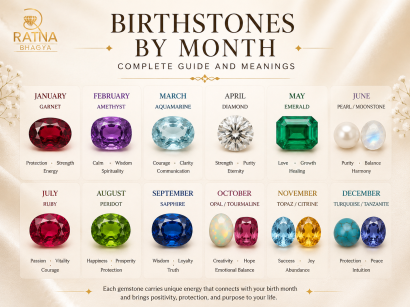
Birthstones by Month: Complete Guide and Meanings
Birthstones are gemstones traditionally associated with a particular month of the year. They have become...
11 March
Meaning And Power Of Magical Blue Sapphire
With its heavenly magnificence, blue sapphire brings eminence, eternality, and insight to its owners. This...
23 July
Common Mistakes People Make While Wearing Gemstones
Gemstones have been admired for centuries for their beauty, rarity, and cultural significance. Many people...
19 June
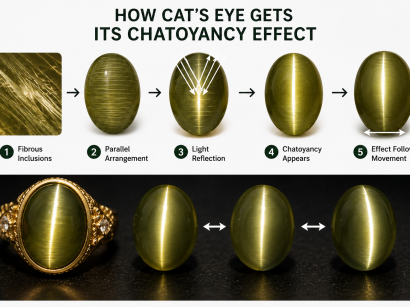
How Cat's Eye Gets Its Unique Chatoyancy Effect
The Cat's Eye gemstone (Lehsunia) is one of the most fascinating gems in the world,...