845, Ground Floor, Udyog Vihar Phase V, Sector 19, Gurugram, Haryana 122016
GET DIRECTION
Amethyst Stone Benefits: Meaning and Healing Properties
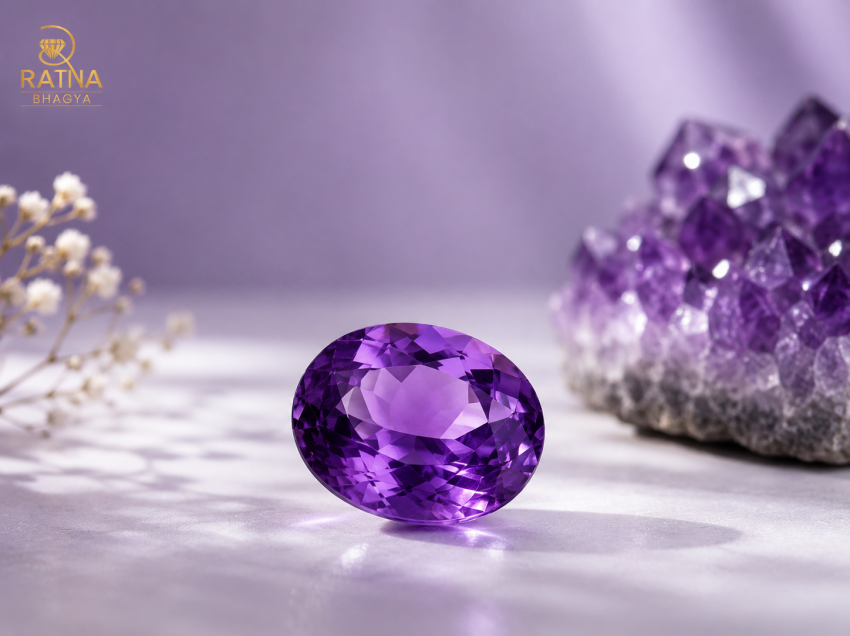
Amethyst Stone is one of the most popular varieties of quartz, admired for its beautiful purple color, natural transparency, and long history of cultural and spiritual significance. From delicate lavender tones to deep royal purple, Amethyst has remained a favorite gemstone for jewelry lovers and collectors around the world.
Traditionally, Amethyst has been associated with peace, calmness, clarity, spiritual awareness, and protection. Many cultures have also connected the stone with sobriety and self-control. Today, it is commonly worn in rings, pendants, bracelets, and meditation jewelry.
But how much of Amethyst's reputation is based on tradition, and what does science actually tell us? This guide explores Amethyst's meaning, traditional benefits, healing properties, varieties, value, and care, while separating cultural beliefs from scientifically established facts.
Disclaimer: The healing and spiritual properties discussed in this article are based on traditional beliefs and modern crystal-healing practices. There is no reliable scientific evidence that wearing or carrying Amethyst can treat, prevent, or cure medical conditions. It should not replace professional medical advice or treatment.
What Is Amethyst Stone?
Amethyst is the purple variety of quartz, a mineral composed primarily of silicon dioxide.
Its purple color is associated with trace elements and irradiation-related defects within the quartz crystal structure. The intensity of the color can range from very pale violet to rich reddish-purple.
Amethyst is found in several parts of the world, including:
- Brazil
- Uruguay
- Zambia
- Bolivia
- Mexico
- United States
- Canada
Amethyst has a hardness of approximately 7 on the Mohs scale, making it suitable for many types of jewelry.
Amethyst Stone Meaning
Amethyst has accumulated many symbolic meanings throughout history.
It is traditionally associated with:
- Peace
- Calmness
- Clarity
- Spiritual awareness
- Wisdom
- Protection
- Self-control
- Inner balance
Its purple color has also historically been associated with royalty, spirituality, and meditation.
For many modern wearers, Amethyst represents a reminder to remain calm, thoughtful, and centered during challenging situations.
Why Is Amethyst Associated with Healing?
The belief in Amethyst's healing properties has existed for centuries.
Ancient cultures sometimes attributed protective or medicinal qualities to gemstones. Over time, these traditions evolved into modern crystal-healing practices, where Amethyst is often described as a stone of emotional and spiritual balance.
However, it is important to distinguish traditional symbolism from medical science.
There is currently no established scientific evidence that Amethyst itself produces a therapeutic effect on the body or treats illness.
Traditional Amethyst Stone Benefits
1. Associated with Peace and Calmness
One of the most common beliefs surrounding Amethyst is its connection with tranquility.
Its soft purple color and spiritual symbolism have made it popular among people who associate it with:
- Relaxation
- Peace
- Emotional balance
- Mindfulness
- Inner calm
Some people choose Amethyst simply as a visual reminder to slow down and create moments of calm in their daily lives.
2. Traditionally Linked with Mental Clarity
Amethyst has long been associated with clear thinking and thoughtful decision-making.
Traditionally, it is believed to symbolize:
- Focus
- Awareness
- Wisdom
- Mental clarity
- Balanced thinking
These associations can make Amethyst especially appealing as a meditation or personal-symbolism stone.
3. Symbol of Spiritual Awareness
Purple has historically been associated with spirituality in many cultures.
Amethyst is therefore commonly used in:
- Meditation practices
- Spiritual jewelry
- Prayer spaces
- Personal rituals
- Mindfulness practices
For believers, the gemstone can serve as a symbolic reminder of personal growth and self-reflection.
4. Traditionally Associated with Protection
Amethyst has historically been regarded as a protective stone.
People have worn or carried it as a symbolic talisman against negative influences and unwanted energy.
Today, this belief continues through modern crystal-healing traditions.
There is no scientific evidence, however, that Amethyst provides supernatural protection.
5. Associated with Self-Control
The name Amethyst is derived from the ancient Greek word amethystos, commonly translated as "not intoxicated" or "sober."
This historical association contributed to the gemstone's reputation as a symbol of:
- Sobriety
- Moderation
- Self-control
- Clear judgment
This is one of the most interesting examples of how a gemstone's name and cultural history influenced its symbolism.
Amethyst and Emotional Healing
In crystal-healing traditions, Amethyst is often described as an emotional-support stone.
It is traditionally associated with:
- Letting go of negative thoughts
- Emotional balance
- Patience
- Inner peace
- Self-reflection
These claims should be understood as spiritual or symbolic beliefs rather than proven medical effects.
For someone who enjoys gemstone symbolism, wearing Amethyst may serve as a personal reminder to pause, reflect, and maintain emotional balance.
Amethyst and Sleep: What Is the Belief?
Amethyst is sometimes marketed as a stone that promotes better sleep.
Crystal-healing traditions may recommend placing Amethyst:
- Near the bed
- Under a pillow
- On a bedside table
However, there is no strong scientific evidence that Amethyst directly improves sleep quality or treats insomnia.
If someone experiences better sleep after using Amethyst, factors such as relaxation, routine, expectation, and personal comfort may play a role.
Persistent sleep problems should be discussed with a healthcare professional.
Amethyst in Spiritual Practices
Amethyst has become particularly popular in modern meditation and mindfulness practices.
It may be used as:
- Meditation jewelry
- A decorative stone
- A personal talisman
- A focal object during mindfulness
- A symbolic representation of spiritual growth
Its beauty and calming color can make it a meaningful addition to a personal meditation space.
Amethyst and the Crown Chakra
In some modern chakra traditions, Amethyst is associated with the Crown Chakra, which is symbolically connected with:
- Spiritual awareness
- Higher consciousness
- Inner wisdom
- Meditation
- Self-understanding
Chakra associations belong to spiritual traditions and are not scientifically established medical concepts.
Amethyst Color and Its Meaning
Amethyst occurs in a range of purple shades.
Light Lavender Amethyst
Soft lavender shades are often associated with:
- Gentleness
- Calmness
- Serenity
- Subtle elegance
Medium Purple Amethyst
Medium-purple stones offer a balance of color and brightness and are popular in jewelry.
Deep Purple Amethyst
Rich purple Amethyst is often highly desirable, particularly when the color is attractive and evenly distributed.
The exact value of Amethyst depends on several factors, including color quality, clarity, cut, size, origin, and market demand.
What Is Ametrine?
Ametrine is a naturally occurring variety of quartz that displays both Amethyst's purple color and Citrine's yellow or orange color within the same crystal.
It is especially valued for its striking two-color appearance.
Bolivia is particularly famous for Ametrine production.
Natural vs Synthetic Amethyst
When buying Amethyst, it is useful to understand the difference between natural, synthetic, and imitation material.
Natural Amethyst
Forms naturally through geological processes.
Synthetic Amethyst
Created in a laboratory with essentially the same chemical and structural characteristics as natural Amethyst.
Imitation Amethyst
A different material—such as colored glass—made to resemble Amethyst.
For inexpensive jewelry, this distinction may be less important to some buyers. For valuable or collector-quality stones, it is worth verifying the gemstone's identity.
How to Choose a Good Amethyst
1. Look at the Color
Color is one of the most important factors.
Look for:
- Attractive purple tones
- Good saturation
- Reasonably even color
- No undesirable brown or gray appearance
The ideal color is subjective, but rich and attractive purple is generally desirable.
2. Check Clarity
Amethyst is typically transparent to translucent.
High-quality stones may have good transparency with limited distracting inclusions.
However, natural inclusions are not automatically a sign of poor quality.
3. Examine the Cut
A good cut should allow the gemstone to display:
- Attractive brilliance
- Good color
- Balanced proportions
- Visual symmetry
Poor cutting can make even good-quality Amethyst appear dull.
4. Consider Size
Large Amethyst specimens are relatively common compared with many other gemstones, so size alone does not necessarily indicate exceptional value.
Always consider size alongside color, clarity, cut, and overall beauty.
How to Care for Amethyst Jewelry
With a Mohs hardness of approximately 7, Amethyst is durable enough for regular jewelry use, but it should still be treated carefully.
Cleaning
Use:
- Lukewarm water
- Mild soap
- Soft cloth
- Soft brush when necessary
Rinse thoroughly and dry gently.
Avoid Excessive Heat
Sudden temperature changes and excessive heat can potentially affect some Amethyst, particularly treated or fracture-sensitive material.
Protect It from Scratches
Store Amethyst separately from harder gemstones such as:
- Diamond
- Sapphire
- Ruby
Be Careful with Strong Light
Prolonged exposure to intense light can cause some Amethyst colors to fade over time, particularly certain treated stones.
Is Amethyst Good for Everyday Wear?
Yes, Amethyst can be worn regularly, especially in jewelry designs that protect the stone.
However, rings receive more impact than pendants or earrings, so extra care is advisable when wearing an Amethyst ring during:
- Exercise
- Household work
- Gardening
- Sports
- Heavy manual activities
Removing the jewelry during such activities can help prevent scratches and accidental damage.
Amethyst as a Gift
Amethyst is a popular gift because of its beautiful purple color and rich symbolism.
It can be given for:
- Birthdays
- Anniversaries
- Graduations
- Valentine's Day
- Friendship celebrations
- Personal milestones
It is also commonly associated with the February birthstone, making it a particularly meaningful birthday gift for people born in that month.
Frequently Asked Questions (FAQs)
What does Amethyst Stone symbolize?
Amethyst traditionally symbolizes peace, calmness, wisdom, spiritual awareness, protection, and self-control.
What are the healing properties of Amethyst?
Crystal-healing traditions associate Amethyst with relaxation, emotional balance, mental clarity, and spiritual awareness. However, these are traditional beliefs and have not been established as medical effects by scientific research.
Can Amethyst help with sleep?
Amethyst is traditionally believed to promote calmness and restful sleep, but there is no reliable scientific evidence that the gemstone itself treats insomnia or improves sleep.
Is Amethyst a natural gemstone?
Yes. Natural Amethyst is a naturally occurring purple variety of quartz.
Is Amethyst suitable for everyday jewelry?
Yes. With a hardness of approximately 7 on the Mohs scale, Amethyst is suitable for many types of jewelry, although it should be protected from strong impacts and scratches.
Which chakra is associated with Amethyst?
In modern chakra traditions, Amethyst is commonly associated with the Crown Chakra and sometimes the Third Eye Chakra.
Can Amethyst fade?
Some Amethyst can fade when exposed to prolonged intense light or heat. Proper storage away from strong sunlight can help preserve its color.
Is Amethyst expensive?
Amethyst is generally an affordable gemstone, although exceptional examples with attractive color, clarity, size, and provenance can command higher prices.
Conclusion
Amethyst Stone combines natural beauty with a fascinating history of symbolism and tradition. Its distinctive purple color has made it a favorite gemstone for centuries, while its associations with peace, clarity, spirituality, protection, and self-control continue to make it popular today.
From a scientific perspective, Amethyst is a variety of quartz whose color and physical characteristics can be explained through mineralogy and crystal chemistry. Its traditional healing properties, however, belong to the realm of cultural belief and crystal-healing practices rather than established medical science.
Whether you choose Amethyst for its elegant purple appearance, spiritual symbolism, birthstone connection, or simply because you love the stone, it can make a beautiful and meaningful addition to any jewelry collection.
When purchasing Amethyst, focus on color, clarity, cut, authenticity, and craftsmanship, and treat traditional healing claims as matters of personal belief rather than medical fact.
Share this post:
Relatest Post
You Might Also Be Interested In
Discover more insightful articles related to this topic to deepen your gemstone knowledge.
13 July
Can Gemstones Really Influence Your Life? Exploring Astrology's Perspective
For thousands of years, gemstones have been treasured not only for their beauty but also...
23 July
Common Mistakes People Make While Wearing Gemstones
Gemstones have been admired for centuries for their beauty, rarity, and cultural significance. Many people...
14 April
APRIL BIRTHSTONE: DIAMOND & WHITE ZIRCON
The April birthstones, the most desired Diamond and the exceptionally glossy White Zircon, are brimming...
3 May
Check out some coolest gemstone to pair up with any Attire
1. Amethyst GemstonesTo reevaluate is to relook and Amethyst is best for reevaluation. To enable...

24 June
10 Famous Celebrities Wearing Ruby Gemstone and Their Success Stories
The Ruby gemstone (Manik) has long been associated with power, confidence, leadership, and success. In...
4 April
WHICH IS THE BEST PEARL: BLACK, GOLDEN OR WHITE
Pearl (Moti in Hindi) is a magnificent white gemstone regarded as the Queen of the...